Author: Marlene Krueger

  • Calla Lily Valley: Cultivating Hidden Potential

    Calla Lily Valley: Cultivating Hidden Potential

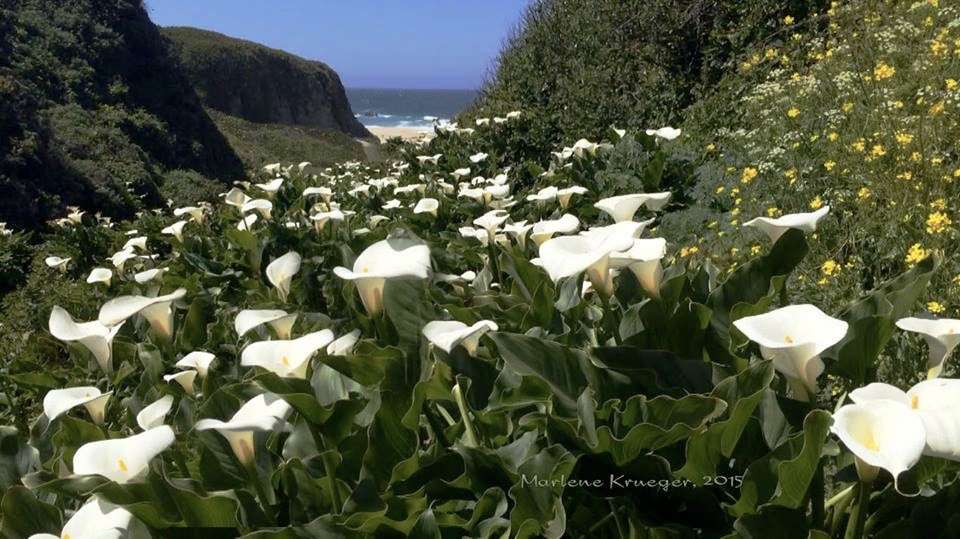
    As you step down the steep trail into the narrow ravine known as Calla Lily Valley at Doud Creek it almost feels like discovering a secret world. It is sheltered entirely from the harsh, salty Pacific winds, and thousands of pristine, brilliant white calla lilies blooming along the freshwater stream. There create a lush sanctuary of life just steps from the crashing ocean surf.

    Watching these delicate flowers thrive in the deep shade of the ravine, protected by the massive surrounding cliffs, felt deeply moving. As an educator, this hidden valley immediately felt like a living blueprint for how I approach my quietest at-risk students.

    In every classroom, there are children who are completely overshadowed by the loud, chaotic energy around them. Because of trauma or academic anxiety, they retreat deep into their terraine, keeping their true beauty and potential hidden away in the shadows. Traditional exposed learning environments can feel too harsh for these delicate minds, causing them to wither instead of bloom. Standing among the lilies, I realized that my kinetic light art inventions needed to act like this sheltered valley—they needed to create a safe, soft protective micro-environment right at a student’s desk.

    Working back in my work station, I used this valley to design the external hoods and soft interior illumination for my prototypes. I engineered deep, recessed viewports that block out the distracting, harsh glare of overhead classroom fluorescent lights. Inside this sheltered shadow box, the moving light patterns shift with a slow, organic tenderness, mimicking the gentle sway of the lilies in the coastal breeze. When a quiet, anxious student sits with this device, the protective frame shields them from the busy room, creating a private sanctuary of calm. Within this gentle space, their nervous system relaxes, their defenses drop, and their hidden creative potential finally finds the safety it needs to bloom.

  • Bixby Creek Bridge:  Arch of Moving Light and Waves

    Bixby Creek Bridge:  Arch of Moving Light and Waves

    As I drove south along Highway 1, the coastline gradually ascended into a breathtaking landscape of gravity. Approaching the sweeping concrete span of Bixby Creek Bridge, I was struck by the colossal and graceful arch bridge that spanned an otherwise impassable canyon. Towering hundreds of feet above the tumultuous Pacific surf, it stood as a testament to the remarkable ingenuity of humanity. Designed specifically to conquer a deep and terrifying divide, Bixby Bridge became an inspiration for the kinetic light art inventions I incorporate into my classroom.

    My at-risk students frequently find themselves on the precipice of a profound emotional and academic chasm. Trauma, systemic barriers, and personal challenges create a sense of isolation and invisibility, leaving them feeling disconnected from the rest of the school environment. Traditional teaching methods often assume that these students can simply overcome these obstacles independently. As I stood at Bixby, I recognized that my role as a teacher extended beyond simply providing textbooks. My mission was to construct a tangible bridge that could safely facilitate their journey across their hidden vulnerabilities.

    Upon returning to my studio, I dedicated my efforts to refining the mechanical components of my light art prototypes. Drawing inspiration from the literal geometry of Bixby Bridge, I meticulously designed the primary internal chassis. Within this chassis, I engineered a curved internal reflector array, akin to a miniature architectural arch. This design enables the kinetic light beams to gracefully bend and stretch across the viewing screen, ensuring a seamless and uninterrupted visual experience.

    The structural arch serves a crucial purpose in stabilizing the internal neon currents, resulting in a continuous loop of soothing color. When my students use this device, they move beyond just watching light. Instead, they connect with something real that helps them navigate their inner turmoil. This grounding effect anchors their focus, alleviates anxiety, and instills a profound sense of resilience, reminding them that regardless of the depth of their challenges, there exists a path to transcend them.

  • The Coastal Light Show: Bringing Pfeiffer Beach to the Classroom

    The Coastal Light Show: Bringing Pfeiffer Beach to the Classroom

    When words or sight aren’t enough, we turn to the sensory heartbeat of the Big Sur coast. Pfeiffer Beach isn’t just a physical location—it is a sanctuary of shifting natural elements designed to soothe the restless and awaken the senses.

    For a few fleeting weeks in winter, the setting sun aligns perfectly with the jagged Keyhole Arch. As the horizon dims, a concentrated beam of iridescent, golden light streams directly through the rock. This momentary “light show” casts a shimmering glow on the water and wet sand.

    Surrounding this visual magic is a landscape rich in texture and color. Approaching the sea arch, the rhythmic crashing of the waves provides a deep, grounding vibration. Beneath our feet, cool, dark sands give way to vivid patches of deep violet and purple. This rare color is created when garnet deposits wash down from the coastal cliffs. The wind and the waves mingle with the scents of fresh rain, crisp winter air, and rich garnet earth.

    Because many of my students are unable to travel to this beautiful stretch of the Los Padres National Forest, I wanted to bring the calming energy of the beach directly to them. Inspired by the crimson, orange, teal, and purple of the Big Sur sunset, I designed an interactive, kinetic light installation. By manipulating a set of motors and continuously changing, iridescent light, my students can step safely into an enclosed environment. Here, they experience the step-by-step beauty of the landscape—the changing colors, the rhythmic motion, and the peace of the beach—entirely on their own terms.

    A Brief History

    As the Los Padres National Forest, the road and beach are named after the magnificent Western Sycamores that line their path, just near the beach. In the summer, from June to August, the area gets a special treat called “June Gloom,” with lots of fog and cool weather.

    The Pfeiffer family’s story started in the winter of 1869 when Michael and Barbara Laquet Pfeiffer went to the southern coast of Big Sur. They were so enchanted by Sycamore Canyon that they decided to settle there, close to the coast, and start a new life. Over the years, their eight children married and raised their families here, creating a legacy that would last for a long time. In 1910, the Pfeiffer family opened the Pfeiffer Ranch Resort at their original home. You can also visit the interesting Esslen site nearby, which tells us about the rich history and culture of the area.

    In 1884, John Swetnam and his wife, Zulema Florence Swetnam, built a lovely cabin right by the Big Sur River. John was so kind that he gave away the first 700 acres of land, which later became the beautiful Pfeiffer Big Sur State Park.

  • Architectural History — Carmel Beach

    Architectural History — Carmel Beach

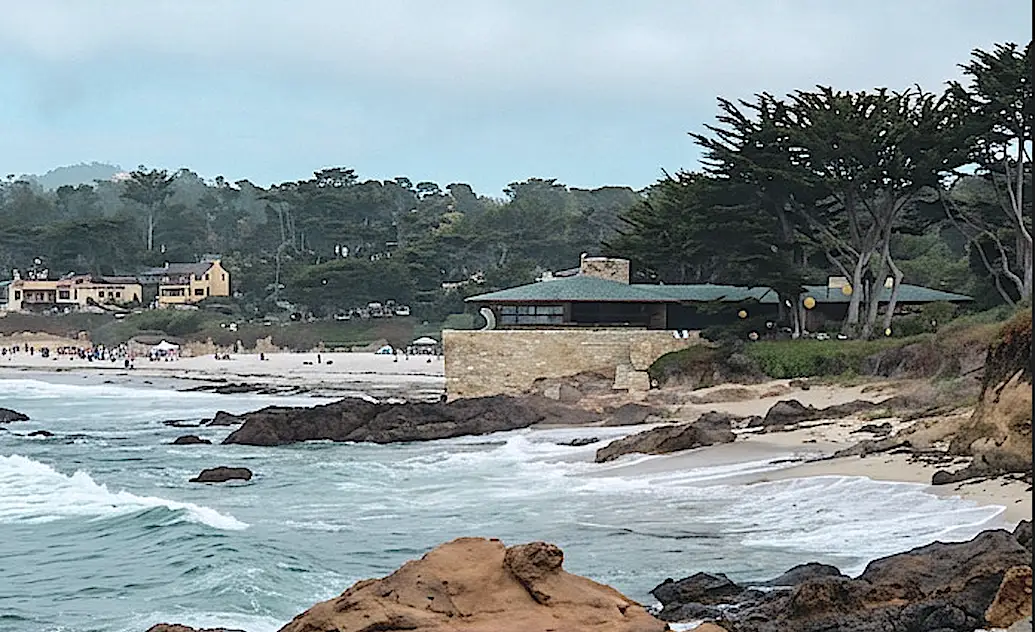
    Carmel Beach reveals a historical and true masterwork of design, built out of local, native Carmel stone with a dramatic, low-slung green copper roof. The house or cabin resembles the bow of a ship cutting cleanly through the granite rocks and Pacific surf. It sits directly on the beach by the ocean, known as the Della Walker House, designed by Frank Lloyd Wright.

    Historical and conceptually, this home was rooted in Wright’s philosophy of Organic Architecture, the belief that a structure should never sit on a hill, but should be of the hill growing naturally out of its environment. It stands on the rocks, with the sharp angles of the house that perfectly mirror the fractures of the coastline. There’s a profound wave of artistic clarity.

    As an educator, the architectural philosophy became the ultimate framework for my classroom inventions. This made me realize that traditional education often tries to force at-risk students into rigid, standardized boxes that completely ignore their personal landscapes. We expect children weathering intense personal trauma to adapt to a cold, artificial environment, rather than building an environment that honors where they come from.

    Inspired by Wright’s ingenuity, I returned to my studio to redefine the relationship between my kinetic light devices and the classroom desk. I engineered the outer casings of my prototypes to flow with low, organic horizontal lines that mimic the natural resting sight-lines of an anxious child. Instead of using artificial, blinding light frequencies, I utilized internal prisms that filter light across local, raw wooden textures, welded with a motor that times naturally with the child’s heart. By making the device an organic extension of the student’s physical workspace, it doesn’t feel like an intimidating school requirement. Instead, it naturally meets them where they are, grounding their nervous systems and proving that true engineering doesn’t conquer a difficult environment—it learns from it to build something beautiful.

  • Carmel River State Beach: Navigating the Confluence of Two Worlds

    Carmel River State Beach: Navigating the Confluence of Two Worlds

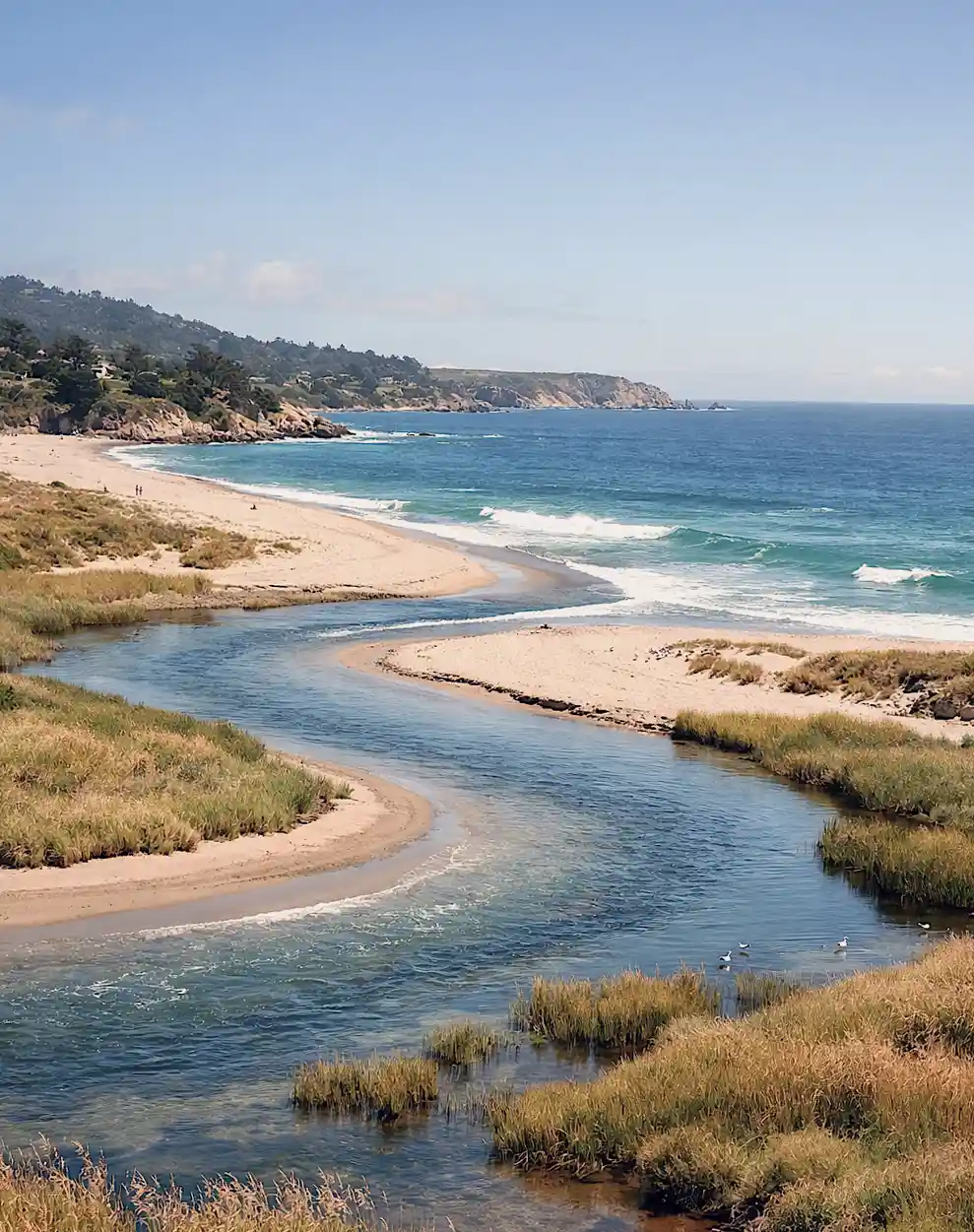
    Stepping onto the wide, sweeping shoreline of Carmel River State Beach feels entirely different from the soft, uniform sands of Carmel Beach just around the point. Here, the landscape is defined by transition. To the left, the calm, fresh waters of the Carmel River form a quiet lagoon, a sanctuary for local birds and marsh reeds. To the right, the powerful, crashing saltwater tides of the open Pacific pound against a steep, dramatic shelf of sand. Watching the fresh river water battle to break through the sand barrier to meet the sea, I was struck by the sheer energy of this meeting point. As an educator, this confluence immediately felt like a physical map of my students’ daily lives

  • The Sands of Carmel: Designing Spaces for Emotional Softening

    The Sands of Carmel: Designing Spaces for Emotional Softening

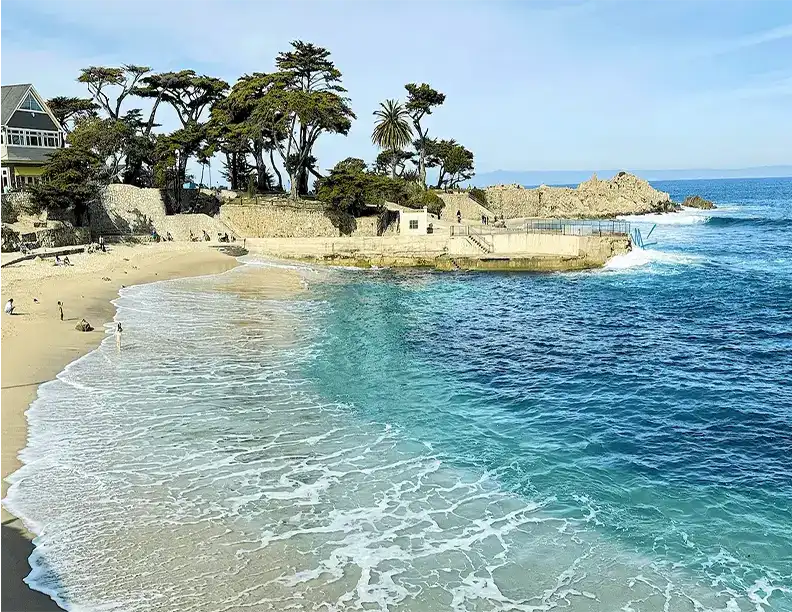
    Emerging from the dense canopies of the Del Monte Forest, the landscape opens dramatically into the pristine, brilliant white sands of Carmel Beach. Watching the gentle, crystalline waves roll smoothly onto the shore, I noticed how the soft, fine sand catches and diffuses the coastal sunlight, transforming harsh glare into a warm, inviting glow. There are no jagged rocks here to break the water; instead, the shoreline gently absorbs the energy of the Pacific. As an educator, this natural softening of the landscape deeply resonated with my classroom mission. It made me realize that to reach at-risk students who have built up hard, defensive walls, my kinetic inventions needed to emit an equally soft, non-threatening light.

    Too often, students navigating trauma or learning difficulties enter the classroom with their defenses completely up, expecting friction or failure. If an educational tool feels too complex or visually jarring, it can trigger their anxiety instead of soothing it. Standing on the shores of Carmel, I knew my prototypes had to mimic this gentle diffusion of energy.

    I returned to my workshop and began experimenting with frosted acrylic screens and sandblasted glass apertures. I engineered the internal light sources to pass through these diffusing layers, completely eliminating any harsh hot-spots or blinding flickers. The resulting kinetic movement across the viewing panel became incredibly velvety and smooth, perfectly capturing the soft, fading light over Carmel Beach. When a highly agitated student sits with this device, the gentle, rolling diffusion acts like a visual embrace, helping their nervous system de-escalate, allowing their emotional walls to safely soften.

  • Point Lobos: Finding Resilient Design in the Twisted Cypress Groves

    Point Lobos: Finding Resilient Design in the Twisted Cypress Groves

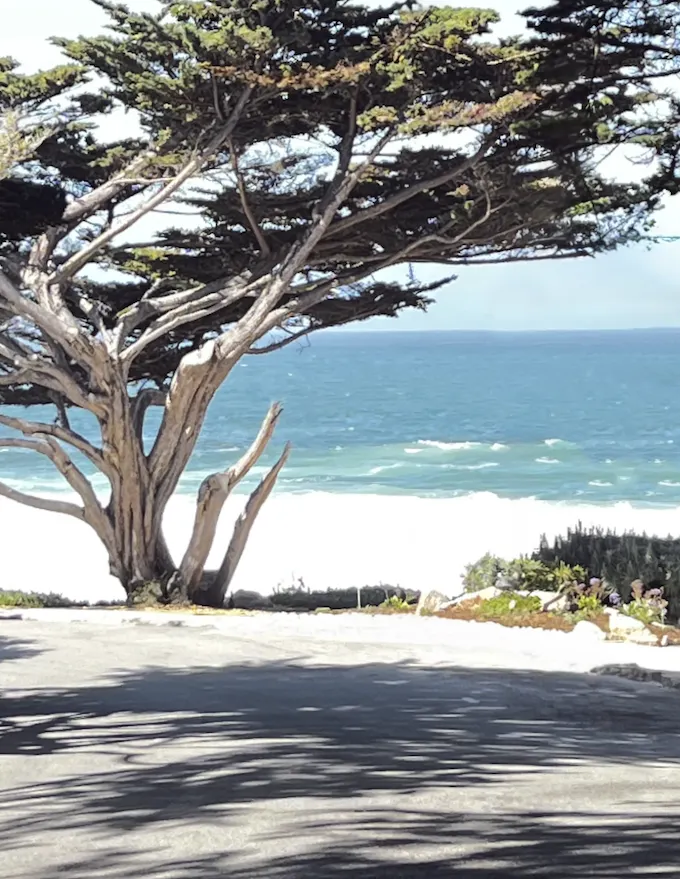
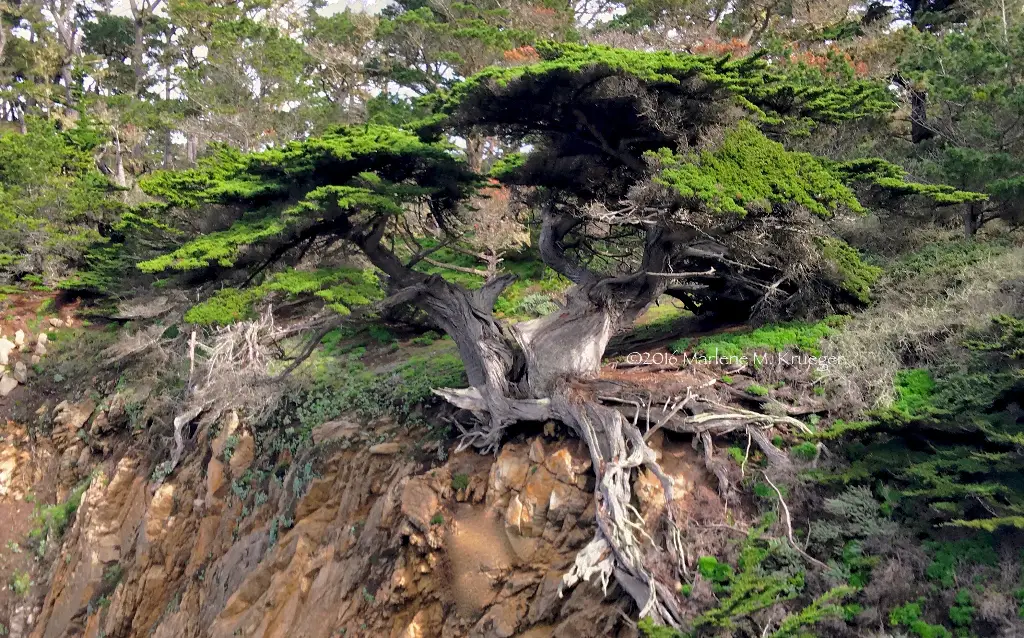
    Leaving the quiet marshlands of the Carmel River and architectural design, the coastline shifts dramatically as Highway 1 approaches the jagged, wave-battered headlands of Point Lobos. Walking along the exposed cliffside trails, I found myself surrounded by the ancient Monterey Cypress groves—rare, sculptural trees that have spent centuries clinging stubbornly to bare granite rock, directly exposed to the fierce, unforgiving winds of the Pacific. Their trunks are deeply weathered, twisted, and scarred, yet they stand completely unshakeable against the crashing surf below. As an educator, staring at these resilient trees felt like looking into a mirror of my classroom. It was here, among the jagged rocks, that the core philosophy of my kinetic light art inventions was born. [1]

    My at-risk students are much like the cypress trees of Point Lobos. They navigate harsh, volatile environments daily, weathered by personal hardships and trauma that most adults would struggle to bear. Yet, despite the storms in their lives, they possess an incredible, stubborn inner strength. Standing on those cliffs, I realized my classroom devices couldn’t just be pretty, fragile decorations. If they were going to serve as emotional anchors for struggling kids, the physical structures themselves had to embody this exact coastal resilience.

    I returned to my workshop with a completely redefined engineering blueprint. Point Lobos inspired me to make the external frames of my light boxes heavy, grounded, and intensely durable, using solid, deeply grained local woods that feel comforting and unyielding to the touch. Inside these rugged, protective shells, I engineered the kinetic mechanisms to project light patterns that mimic the sun filtering through the tangled cypress canopy—a dance of shifting shadows and steady golden beams. When my students interact with these devices, they are grounded by their physical strength while their minds are calmed by their fluid movement. This sanctuary taught me that true art doesn’t shield us from the storm; it builds a resilient frame to help us weather it.

  • The Butterfly Detectives: Dr. Fred and Norah Urquhart

    The Butterfly Detectives: Dr. Fred and Norah Urquhart

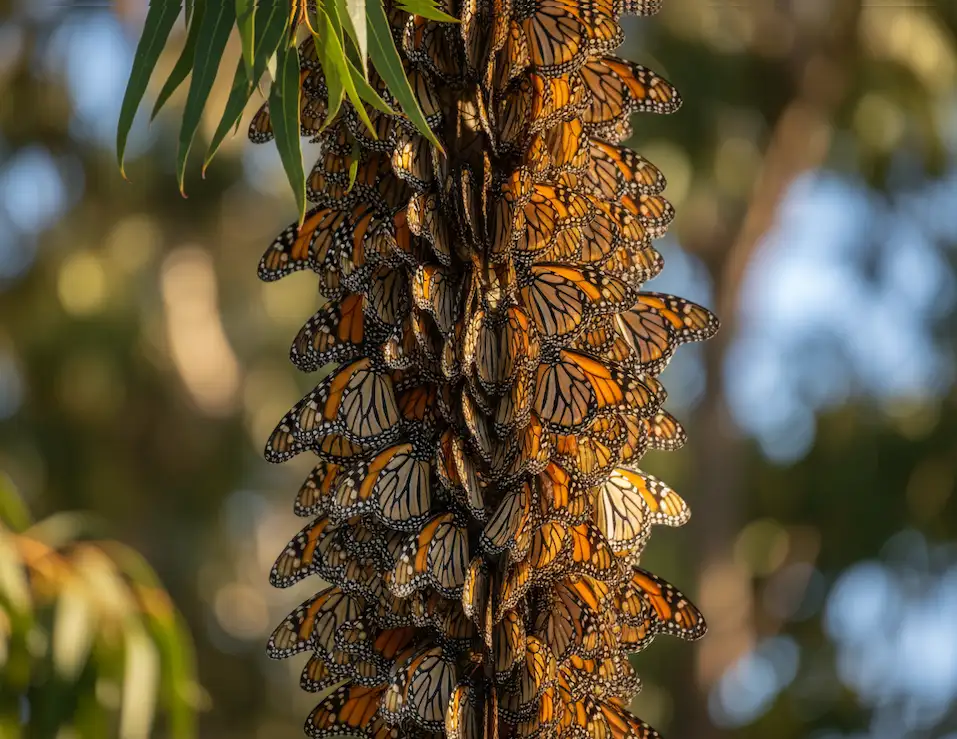
    Scientists knew millions of butterflies arrived in California and Mexico every winter, but because butterflies are so small and fragile, nobody knew exactly where they came from or how they found their way.

    In the 1940s, a scientist named Dr. Fred Urquhart and his wife, Norah, decided to solve this mystery. They became the ultimate “butterfly detectives.”

    The Heroic Challenge: Tagging a Cloud

    To track a butterfly, Fred and Norah needed to label them. But how do you label a creature that weighs less than a penny without hurting its wings?

    Fred and Norah spent years testing different ideas. They failed many times, but they never gave up. Finally, they invented a tiny, gentle sticker about the size of a fingernail. It said: “Send to Zoology University, Toronto, Canada.”

    A Lesson in Community and Inclusion

    Fred and Norah realized the mystery was too big for just two people. They needed help. They created an international team of thousands of ordinary citizens, including school children, teachers, and volunteers. Across North America, thousands of kids gently caught butterflies, applied Fred’s tiny stickers, and released them back into the sky.

    For 40 years, Fred and Norah carefully recorded every single letter and sticker sent back to them, mapping out the thousands of miles these insects travel.

    The Mystery Solved

    Because of their absolute focus and patience, Fred and Norah finally solved the mystery in 1975. They proved that these tiny, delicate insects fly over 3,000 miles to reach their winter sanctuaries.

    Fred and Norah teach our students a beautiful lesson: you do not need to be loud or strong to change the world. By working quietly, staying focused on a goal, and inviting others to help, even the smallest hands can uncover the greatest mysteries of nature.

    🔍 [Click here to meet Fred and Norah Urquhart], the amazing butterfly detectives who spent 40 years tracking the silent journey of the Monarchs!

  • The Del Monte Forest Sanctuary: Engineering Order From the Woods

    The Del Monte Forest Sanctuary: Engineering Order From the Woods

    Entering the dense, winding canopies of the Del Monte Forest changes the entire sensory experience of Highway 1. The crashing symphony of the Pacific Ocean suddenly softens, replaced by the hushed, protective stillness of ancient Monterey Pines and dramatic Monterey Cypress trees.

    Walking through this shaded sanctuary, I watched the sunlight filter through the dark branches, casting delicate, shifting geometric fractures of light across the forest floor. As an educator, this sudden transition from the bright, chaotic coastline to the quiet, structured woods felt profoundly symbolic. It was the exact environment I needed to solve a critical design challenge for my at-risk students.

    Up to this point on my journey, my ideas for classroom kinetic light art were fluid and broad, much like the open ocean. But inside the Del Monte Forest, looking at how the stubborn trees organized themselves to thrive in dense shade, I realized my devices needed structural order. My students navigate chaotic, unstructured lives outside of school; when they enter my classroom, they need an environment that feels stable, predictable, and safely organized.

    This forest inspired me to design the internal grids and light-baffles for my prototypes. I engineered precise wooden frames that housed the internal gears, ensuring the moving light patterns didn’t scatter wildly, but instead flowed along soft, predictable tracks. By trapping the kinetic light inside a beautifully structured grid, I mimicked the calming, dappled light of the Pebble Beach groves. When my students interact with these devices, they don’t just see pretty colors; they experience a soothing, mechanical reliability that helps them ground their anxiety and feel secure. This milestone stands as a reminder that true creativity requires a strong structure to protect it.

  • Kinetic Lights: The Story of Inventor Marlene Krueger

    Kinetic Lights: The Story of Inventor Marlene Krueger

    Reinventing Light Therapy

    Marlene Krueger always dreamed of inventing a type of kinetic installation, that blends art, physics, and emerging technology to help people heal. As a child, she loved wandering around the family ranch, where rows of sweet peas sparkled in the sun. The peas glowed softly, moving at variable degrees of light, moving Marlene with an assuring embrace, almost like it was saying everything’s okay. She picked up a little translucent pod and felt a deep connection with nature that washed away the pain she had been experiencing. From that day on, Marlene was determined to share that moment with others.

    Fast-forward, at the School of the Art Institute of Chicago, working on an MFA, Marlene begins building kinetic light art devices, aimed to help others. She took a course on “Kinetics, Electronics, and Neon”, where she began designing prototypes. She did classes with teachers, experimenting ways to help people by creating art using her devices.

    One day Marlene came across an article in “Art in America” as she further researched about kinetic art, there was a phone number, so she decided to call. She expected a receptionist to answer, instead Dr. Billy Kluver, in a kind voice, an engineer from Bell Laboratories, known for doing collaborative, and engineering kinetic art for artists, answered. “He was like a kind father who would do anything for others”, Marlene expressed.

    Dr. Kruver assisted well-known pop artists who sought for his help engineering kinetic devices. He took time on the phone sharing stories about the artists he worked with and in turn took time listening to Marlene’s stories for almost an hour, talking about everything under the sun, sharing her life’s purpose.

    Dr. Kluver was so impressed by Marlene’s passion and dedication that he invited her to meet with him in New York City, along with his wife, Julie Martin, who is known for writing articles for “Art in America.” Julie had written many of Dr. Kluver’s experiments with various mechanical devices who often assisted the pop artists in the 1960s.

    As Marlene accepted Dr. Kluver’s offer in a heartbeat, she decided Christmas break would be best. Dr. Kluver also gave her Earl Reibeck’s phone number, inventor of the infinity mirror seen in a “Star Trek” episode. Dr. Kluver thought Marlene should get in touch with him. That he’d be happy to share what he does with luminal art. Marlene followed through and called Earl Reibeck. She thought he was very congenial on the phone. They talked about everything under the sun. Later, he invited Marlene to visit him in New York City to show his work at his home in Manhattan. Marlene said yes.

    Marlene’s trip to New York was a calling. To be in the middle of the city’s lively culture and galleries at Soho, accompanied by Dr. Kluver and Julie Martin at dinner, and then after midnight, out for a walk to view his inventions at galleries, was all unexpected.

    After her unforgettable visit in NYC, Marlene went back home to Chicago and immediately continued work on a solid version of her luminal art. Upon completion, Marlene tested it out with her professors at the Art Institute, as well as teachers and students from high schools and colleges all over the city. Many were intrigued.

    Marlene stayed focused on her vision at the School of the Art Institute of Chicago. She later was invited to discuss about her work at auditoriums that seated 400 to 500 people. Besides her talk, her work got noticed, and she was invited to exhibit her large scale installations in a gallery downtown Chicago. Today, Marlene continues on with her kinetic light devices.

error: Content is protected !!
Verified by MonsterInsights