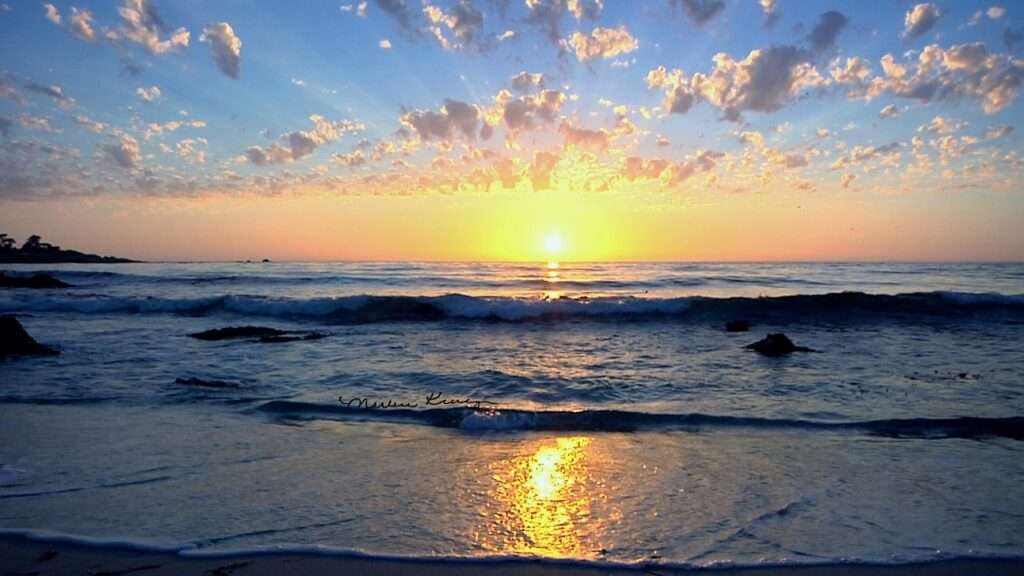
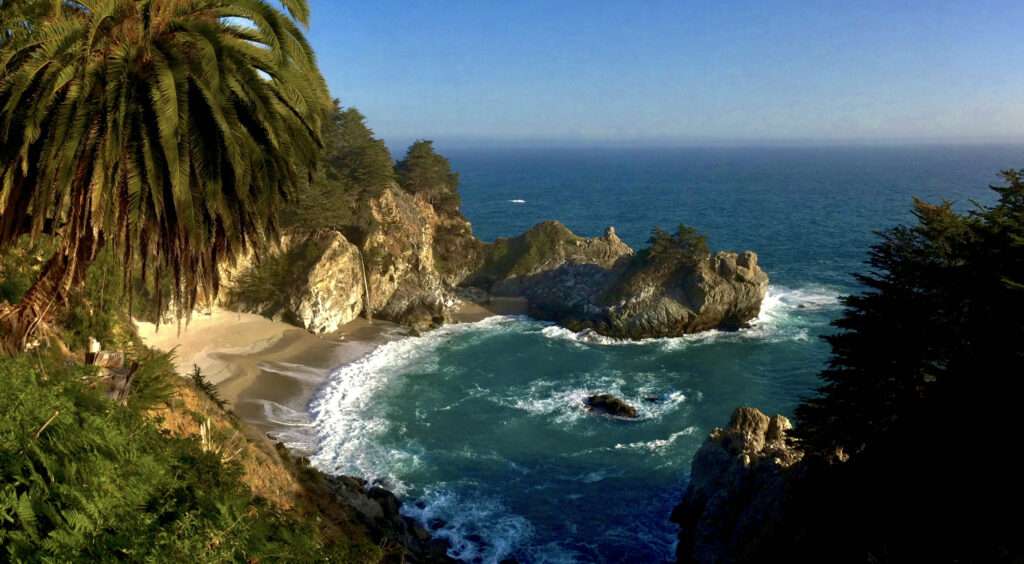
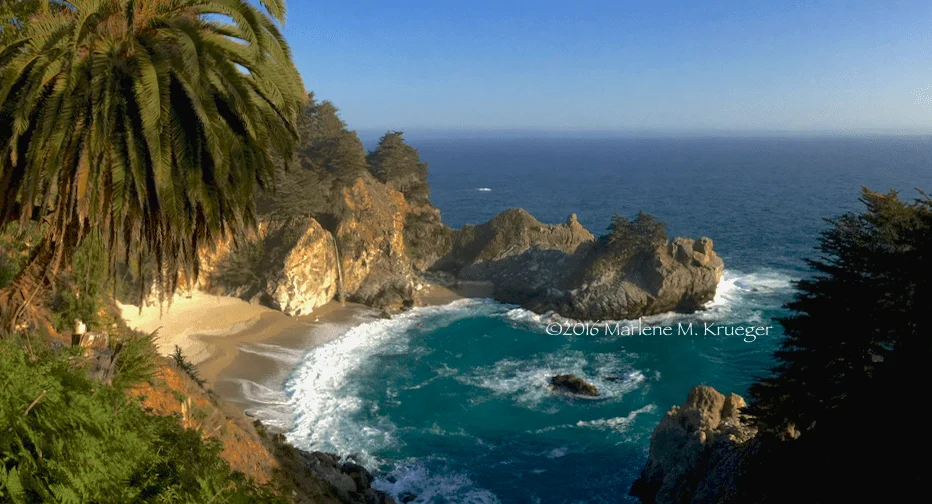
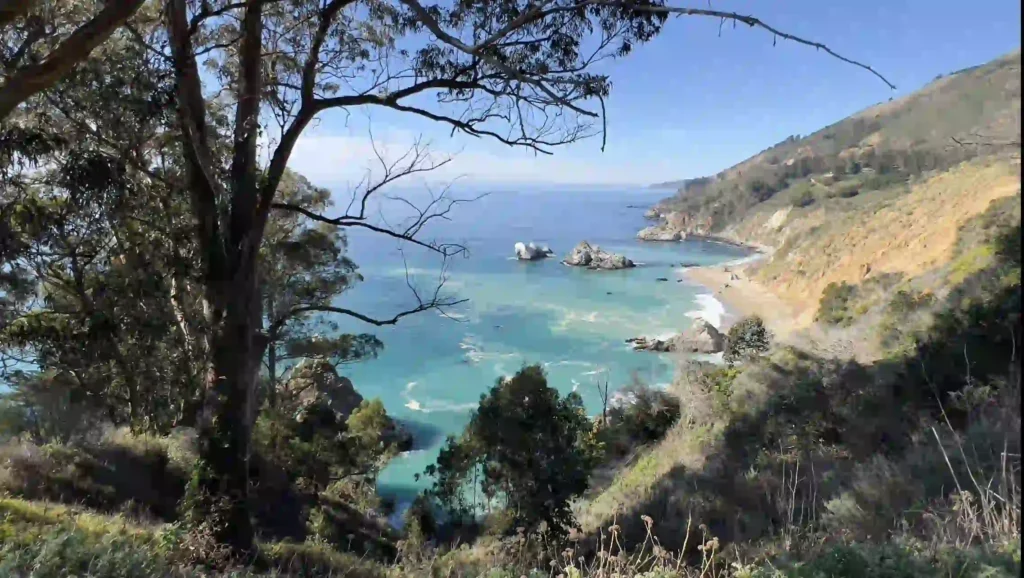
McWay Falls exemplifies fluidity, profoundly influencing my luminous kinetic approach, as the continuous pristine water cascade onto an untouched beach.
The partly cloudy skies at McWay Falls reveal a teal, aqua marine blue, mixed with turquoise hues of the sea. The rocks by the water would be adorned with teal blue and turquoise tones. Swirling sand on reflected colors of deep aqua waters with shimmering glasslike white would move with the design.
I decided to unwind and create art at McWay Falls, laying out a few shells with vibrant colors for a light art to do at home. I noticed that the night brought fog with translucent clouds, creating swirls and haze similar to what my kinetic light art would produce. At night, I decided to create another layout of the dark sky with translucent lights piercing through the night, adding glowing effects.
The Story of McWay Falls
In 1924, Latham Brown, a U.S. congressman embarked on a journey to Big Sur with his wife, Hélène Hooper Brown. Their travels led them to acquire Saddle Rock Ranch, a 1,600-acre property. This property includes a seaside bluff called Saddle Rock, with breathtaking views of Saddle Rock Cove.
Hélène, a close friend of Julia Pfeiffer Burns, shared a profound connection until Julia’s Passing in 1928. For many years, Julia’s great-niece, Esther Julia Pfeiffer, and her husband, Hans Ewoldsen, cared for Saddle Rock Ranch devotedly. They resided in a charming redwood cabin perched on the cliffs, across from the breathtaking McWay Falls.
In 1940, they embarked on a transformation, constructing a modern two-story house named Waterfall House. The entrance of Waterfall House exhibited an exquisite brass fish, a golden octopus, and a compass rose. Upon entering, the well-appointed interior was found striking, featuring exquisite furniture and classic paintings that exuded an air of timelessness.
During the construction of the Carmel-San Simeon Highway through Big Sur, the foreman at Saddle Rock Ranch, Hans Ewoldsen, found himself working in the machine shop of the highway crew. His job was to create a “Pelton Wheel” utilizing redwood from the canyon, among other materials there. In 1932, he successfully installed the innovative wheel on McWay Creek a water-powered wheel that served as the first electric power source in the Big Sur region. It played a crucial role in powering three houses, a blacksmith shop, and a delightful funicular railway, revolutionizing the area’s energy landscape.
In 1956, Lathrop and Hélène Brown embarked on a journey to Florida, where Lathrop’s untimely passing in 1959 left a profound impact. In 1961, Hélène Hooper Brown, driven by her deep admiration for her friend Julia Pfeiffer Burns, a true trailblazer, donated the entire property to the state.
She stipulated that the land would transform into a park and be named in Julia’s honor. Hélène also requested that Waterfall House be transformed into a museum, exhibiting rich indigenous Indian artifacts, plants, and animals of the California coast, as well as historical items from the Big Sur region.
Unfortunately, due to competing museums vying for attention, a lack of financial resources, and the challenging accessibility of the site, the museum’s completion was delayed.
Eventually, the mansion was demolished in 1965. In a fitting tribute to the past, an overlook of McWay Falls was constructed where the old home once stood, preserving the memory of Lathrop and Hélène Brown’s remarkable journey.
It’s like stepping into an abstract masterpiece. Being part of a scene with swaying trees, and ever changing scarlets sunsets, that bring you to another scene. The trail meanders through shades of teal and turquoise, shimmering in the beach and adorned with shiny stones that resemble jade. The enchanting setting emits a sense of tranquility.
Standing there, you feel like an integral part of the seascape, performing on stage. Point Lobos State Reserve inspires in a new way of creating from within. The beaches are filled with intriguing patterns that showcase their dynamic and rocky nature in every turn, reflecting the constant changes in life.
There’s a museum within the reserve that showcases artifacts. It brings us back to the historical significance of Point Lobos, stimulating our senses.
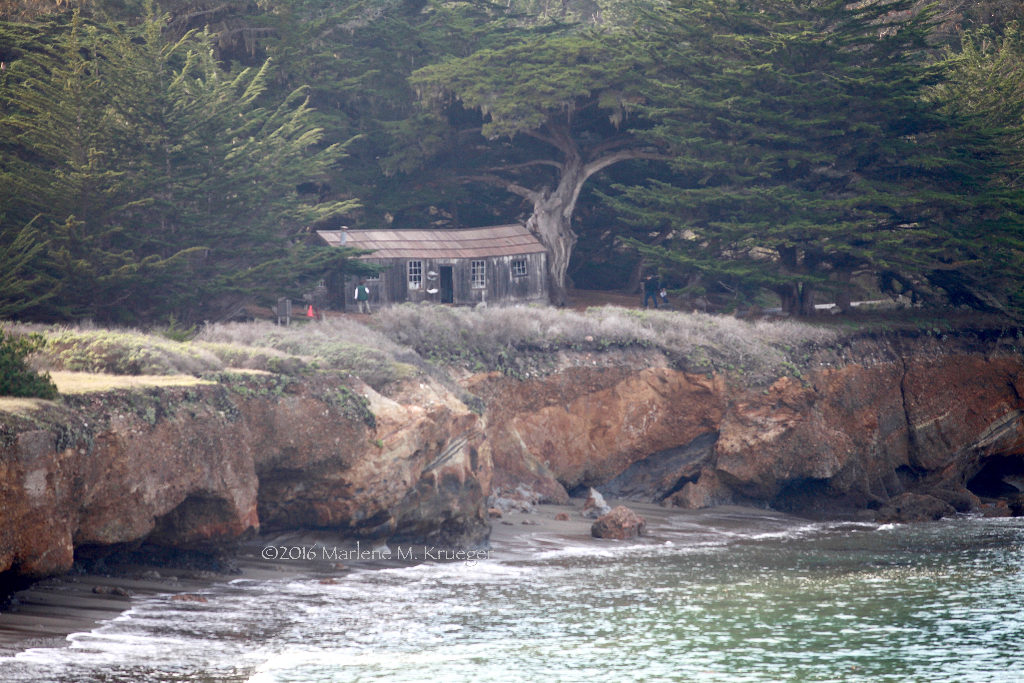
Here, there’s a cabin built by early Chinese fishermen in the 1850s. The Whaler’s Cabin at Point Lobos State Natural Reserve, one of the last remaining wood-frame buildings of its kind on the Monterey Coast in a humble pine cabin with a massive history.
The Whalers Cabin at Point Lobos has been a home to Portuguese whalers, Japanese abalone harvesters, and WWII soldiers. Now, it operates as a museum preserving the region’s rich maritime history.
Inside the Museum: Cultural Artifacts Revealed
When state archaeologists excavated beneath the cabin’s sub-flooring in 1986, they unlocked treasures of multicultural domestic and industrial items. Visitors can explore these key historical displays at the Whalers Cabin Museum:
Whale Vertebrae Foundations: Six massive gray whale vertebrae were discovered under the floorboards, used by early residents as makeshift structural joist supports.
Chinese Domestic Life: Displays feature authentic 19th-century chopsticks, bamboo skewer sticks, and intricately patterned Chinese ceramic and pottery shards.
Abalone Button Workings: Pre-industrial tools and discarded shells highlighting how early Chinese and Japanese settlers manufactured decorative clothing buttons out of iridescent abalone.
Whaling Tools: Harpoons, heavy blubber-cutting knives, and vintage photographs documenting the treacherous operations of the Carmel Whaling Company.
The Outdoor “Try Pots”: Located just outside the cabin, these massive iron cauldrons were used to boil down whale blubber into oil.
Welcome to this space. My name is Marlene Krueger, and I am a local educator, creator, and explorer based in Monterey County. This digital journal is a personal narrative tracking two intertwined journeys: my walks along the Pacific coast and the emotional well-being of my students. For years, I have explored the shoreline from Monterey Bay down to Salmon Creek in Big Sur, collecting observations on how light moves across water, fog, and stone. What began as a personal practice to find quiet reflection quickly evolved into a dedicated classroom mission.
As a teacher working closely with at-risk youth, I see firsthand the silent hardships my students navigate daily. Academic anxiety, trauma, and personal obstacles often manifest as a dense mental fog, making traditional, rigid classroom instruction feel impossibly distant. I realized these children didn’t need more lectures; they needed a sensory anchor to pull them back to a safe baseline. Inspired by the rhythmic surge of the local tides, the resilient trees of Point Lobos, and the persistent sunlight piercing through the coastal mist, I began designing kinetic light art prototypes directly inside my workshop.
Today, I build these interactive devices specifically to bring a sense of deep calm, focus, and wonder into the learning environment. By translating the fluid, soothing visual movements of the Monterey coastline into tactile light displays, I provide my students with a peaceful mechanical rhythm that helps them relax their minds and lower their defenses. This website is the visual archive of that work. Each photograph and memory in this journal represents the exact geographic milestone that sparked a design, proving that even in the deepest classroom shadows, light can always find a way through.
As I walk through Pacific Grove, I feel as if I am part of history. For centuries, the Rumsen Ohlone people gathered abalone along these rocky shores, leaving behind deep shell mounds wrapped in the roots of twisted cypress trees. By the late 1800s, a new sound echoed through the pines.
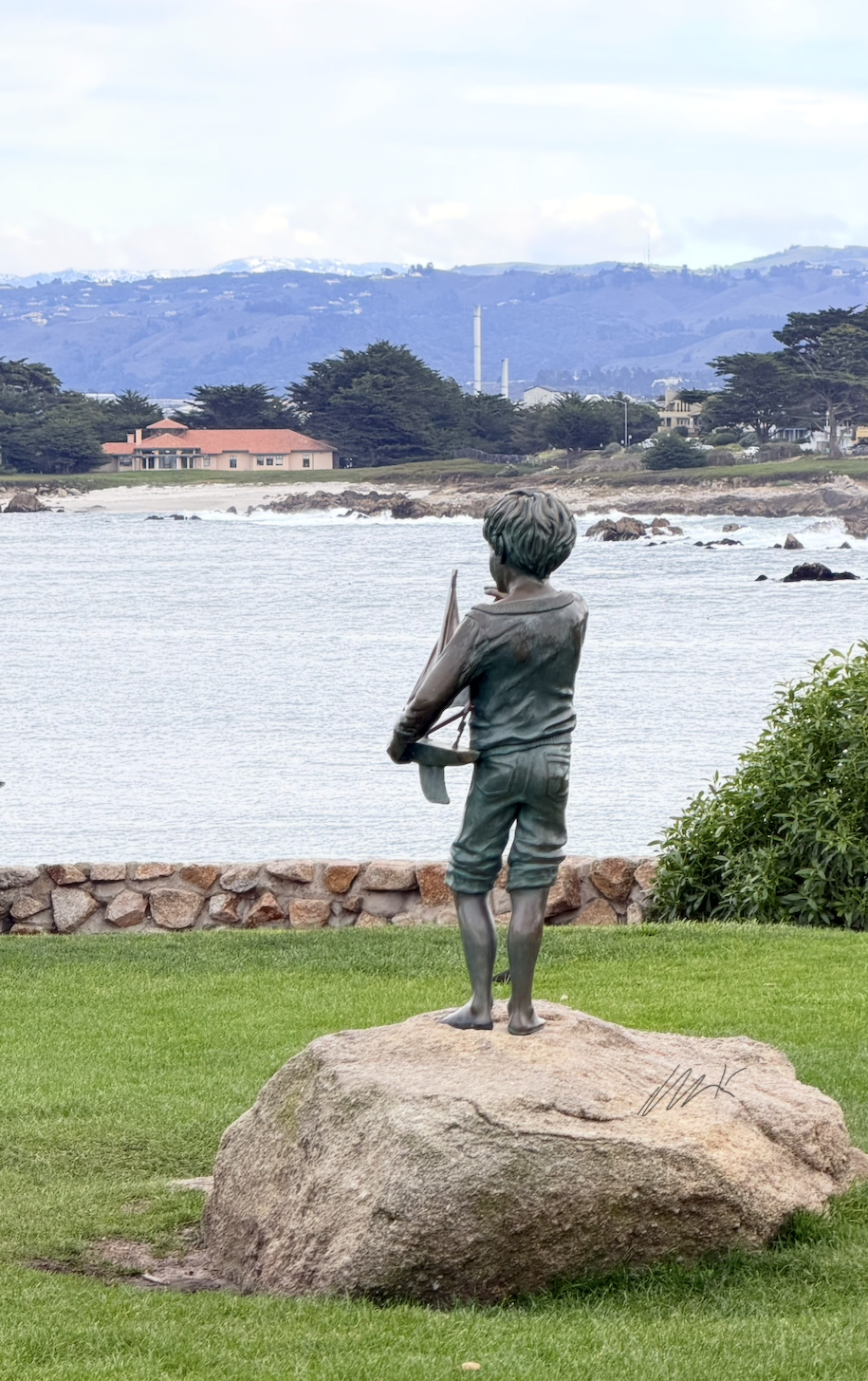
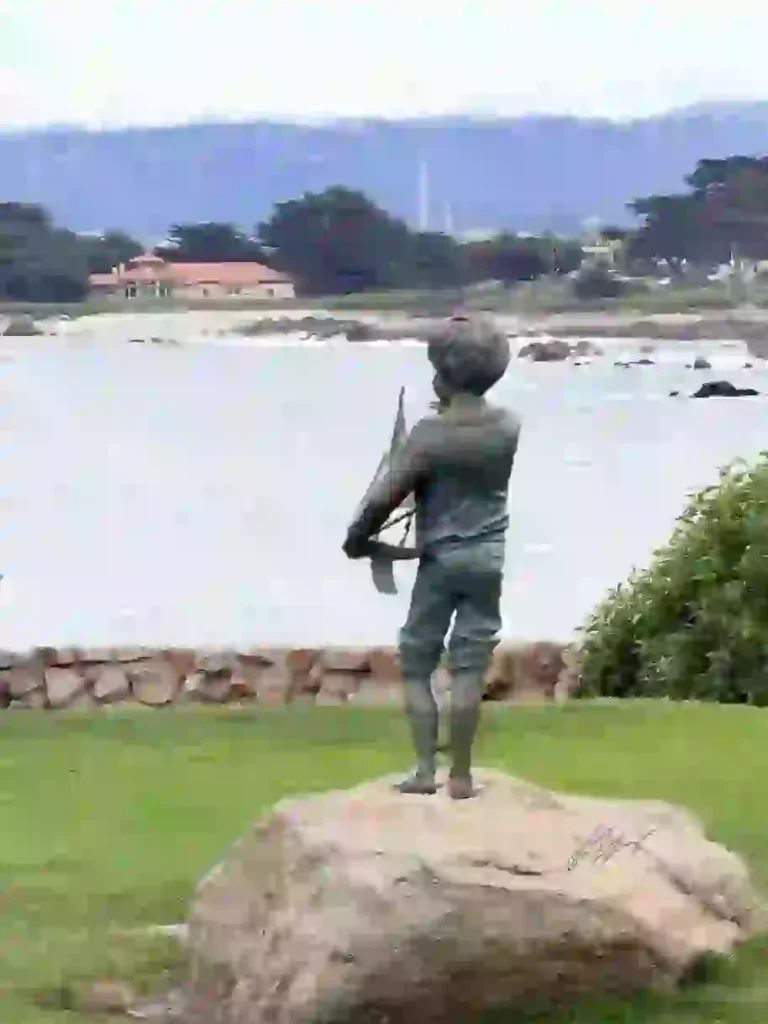
If you stand at eye level near the shoreline, your camera can frame a stunning visual narrative: a detailed bronze statue of a young boy holding a toy sailboat in the foreground, looking directly across the glittering waters of Monterey Bay toward the historic Hopkins Marine Station and the Monterey Bay Aquarium at Pacific Grove, with the hazy silhouettes of distant mountain ranges anchoring at the horizon.
As the decades marched on, Pacific Grove retained its quiet, Victorian charm, consciously choosing to skip the bustling commercialism of neighboring Monterey. Colorful Queen Anne cottages lines the streets, their wrap-around porches facing the crashing waves of Lovers Point.
Tonight, the town breathes its rich past. A modern traveler walks down Lighthouse Avenue, passing historic brick storefronts that have stood for over a century. The scent of pine needles mixes with the briny Pacific tide. Here, history is not preserved in a textbook; it lives in the protected Monarch sanctuaries, the steady sweep of the Point Pinos light, and the enduring peace of a town built between the forest and the sea.
The morning I took this photograph of Monterey Bay, the horizon was completely swallowed by fog. Standing at the water’s edge, I watched the heavy mist slowly lift, revealing a vast, open expanse of deep blue. It was a beautiful transition from total obscurity to absolute clarity. As an educator, this visual immediately made me think of my at-risk students. Too often, trauma, academic anxiety, and difficult home environments act like that heavy coastal fog. These challenges cloud their potential, leaving them feeling lost and invisible in a traditional, rigid classroom setting.
That morning, looking at the shifting light on the water, I realized these kids didn’t need another standard textbook or a lecture. They needed an anchor—something tangible, moving, and fascinating that could cut through the mental fog and gently pull their focus back to the present moment. This specific view became the direct catalyst for my first kinetic light art device.
I went back to my studio and began brainstorming for a prototype that mimicked the fluid, rolling motion of the Monterey tides. I engineered internal gears that allowed soft, colored lights to shift and pulse gently across a viewing screen. When I brought the finished device into the classroom, the result was incredible. The quiet, hypnotic movement of the light caught the attention of my most disengaged students. For the first time in weeks, the classroom chaos faded away, replaced by a calm, focused curiosity.
This photograph is not just a landscape; it is the exact moment my design journey began. It reminds me that with the right framework, we can help every student find their way out of the fog.
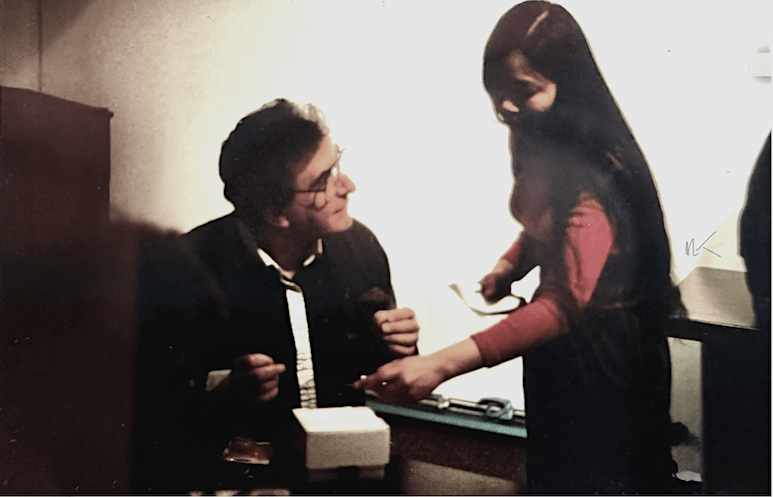
Professor Don Seiden evaluating Marlene Krueger on how she would work with the greater population with her light devices and how her work will have a positive impact on people’s well being.
Marlene Krueger is an innovative professional in the art therapy field, specializing in the design and development of original sensory light prototypes. A graduate of the prestigious School of the Art Institute of Chicago (SAIC), Marlene combines a deep understanding of psychological healing with hands-on technical innovation to create immersive, therapeutic art environments.
Driven by a personal understanding of trauma recovery, Marlene’s career is dedicated to helping individuals heal, find emotional balance, and build psychological resilience. During her time at SAIC, she pioneered the development of kinetic, light-based art installations engineered specifically for special education environments. These advanced prototypes serve as powerful therapeutic interventions, designed to help neurodivergent students process trauma, reduce sensory overload, and gently redirect severe behavioral distress.
By focusing on visual and tactile light cues, Marlene’s inventions provide individuals with the grounding tools necessary to find internal focus, manage emotional pain, and safely navigate the public sphere. Her work stands at the intersection of creative clinical therapy and modern wellness design, offering actionable, beautiful solutions that prevent self-harm and protect the well-being of the wider community. Today, Marlene continues to refine her light prototypes, offering consulting, installation designs, and trauma-informed art therapy solutions.
Photo Journal of an Illuminating Monterey
Marlene Krueger
A photo Journal is like the magic of telling stories through pictures, where photography and journalism dance together beautifully. It mainly captures what’s happening now and the stories that make us human.
From Lover’s Point across the timeless waters of Monterey Bay, where West Coast marine science truly began.
Capturing History at Lover’s Point: Where Art Meets Marine Science in Monterey
Discover the rich history behind the iconic view at Lover’s Point in Pacific Grove, featuring Dorothy Fowler’s bronze statue, Stanford’s Hopkins Marine Station, and the Monterey Bay Aquarium.
A peaceful, view of a tranquil Monterey Bay
The tranquil shoreline meets soft, rolling Pacific waves under the afternoon sky. In a distance, wind-swept ancient cypress trees stand guard along the rugged California coastline.
At the shoreline public parks, it’s easy to sit and mesmerize. Just imagine a deep canyon the size of the Grand Canyon, at the tip of my toes, underneath the Monterey Bay.
“Named by legend and designed by nature.” Exploring Point Aulon (the old Spanish name for this abalone-rich coast)
Misty Morning Serenity at Monterey Bay
At Monterey Beach, kayakers get ready for a long excursion starting at the crack of dawn, where the calm water glistens as the morning sun rises, and a light, hazy fog pierces through the cypress trees, creating an aura reminiscent of a classic 1950s mystery movie.
Where the forest meets the sea—a quiet, misty morning on the California coast.
Mesmerized by the Open Sea: Wildlife Viewing at Monterey Bay Aquarium
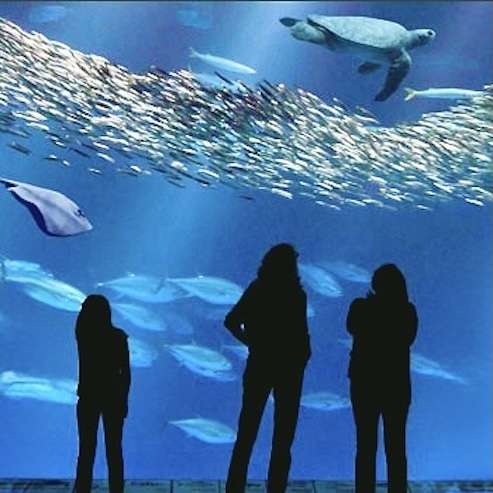
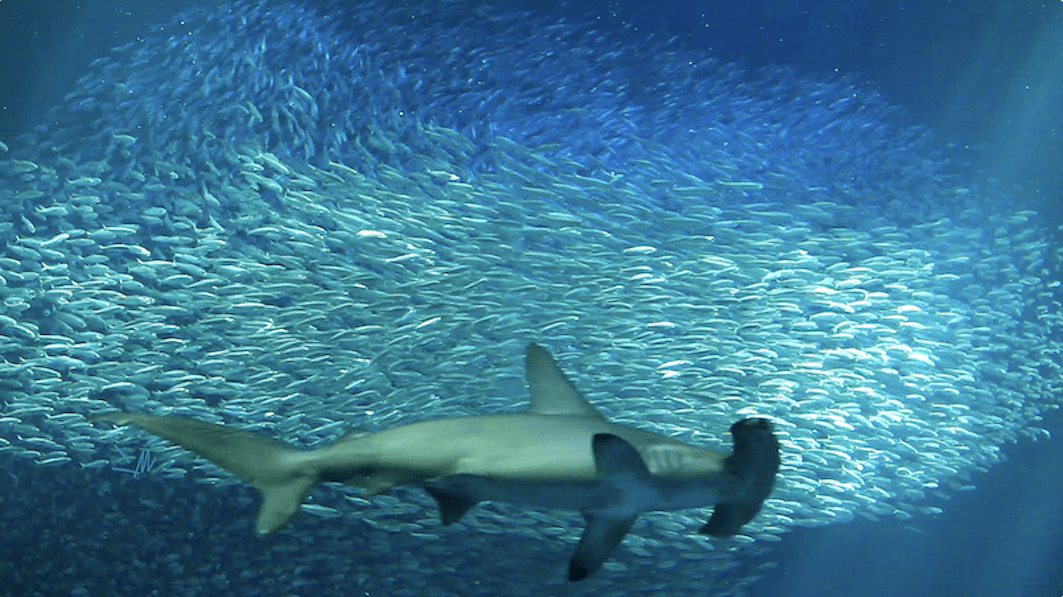
As hundreds of Pacific bluefin tuna, swirling schools of sardines, a pelagic stingray, and a green sea turtle glide through the million-gallon Open Sea exhibit, visitors are mesmerized for hours.
Step into the breathtaking blue of the Monterey Bay Aquarium’s largest community tank. This spectacular underwater photograph captures a massive school of shimmering sardines creating a synchronized display, alongside darting Pacific bluefin tuna, a gliding pelagic stingray, and a graceful green sea turtle.
In the foreground, the silhouettes of three awe-struck visitors look up in wonder, emphasizing the immense scale and magic of this marine sanctuary on Cannery Row.
Hammerhed shark dangerously along hundreds of sardinesSea otter staring at us at the Monterey Bay Aquarium.
I continue to wander through the Monterey Bay Aquarium, where I had a chance to look eye to eye at a sea otter staring at me.
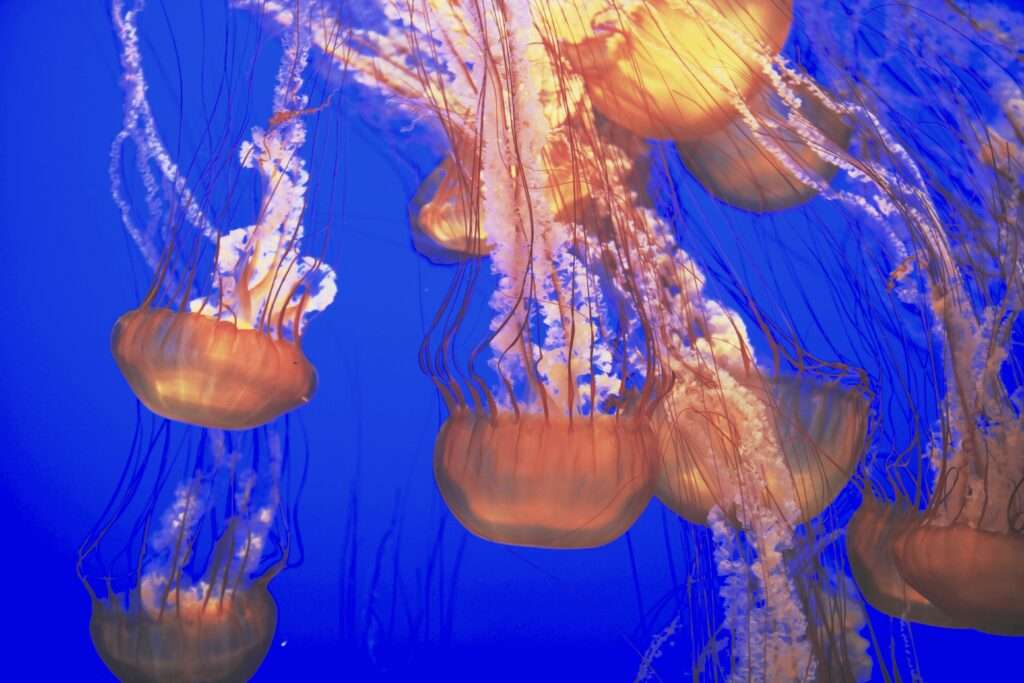
Entangled Jelly Fish
The jellyfish paced with me as I walked to the sardines, tuna, and sea turtles, flow with a hypnotic pace that you just wish to stare for hours.
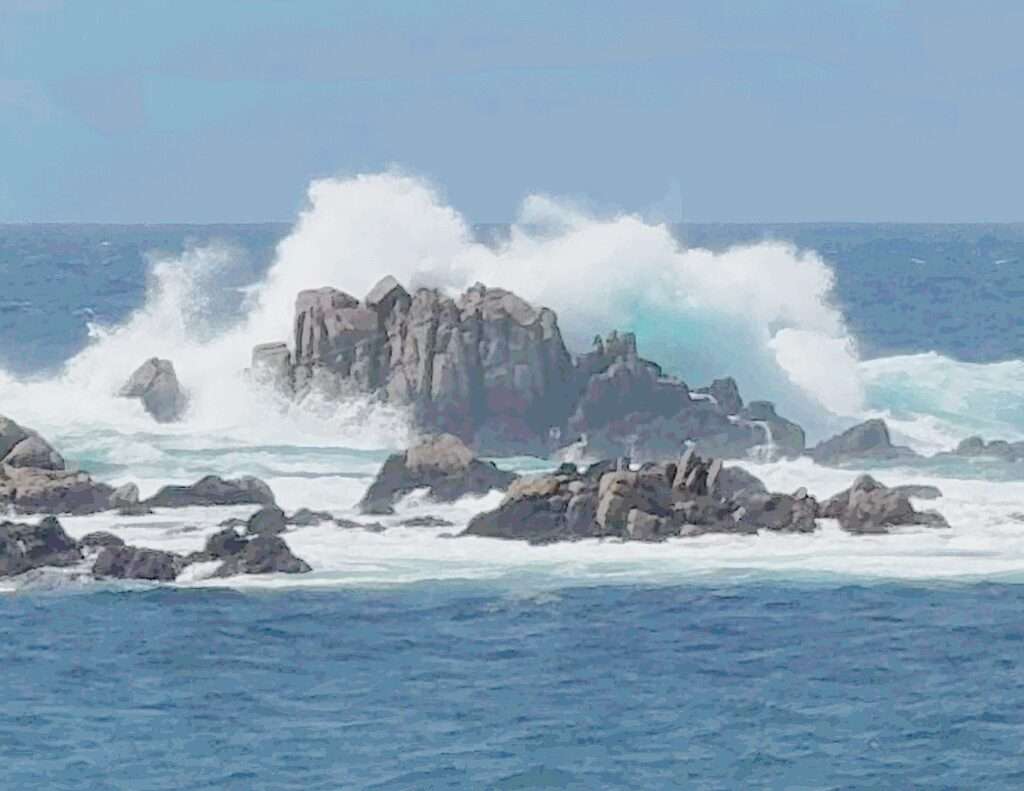
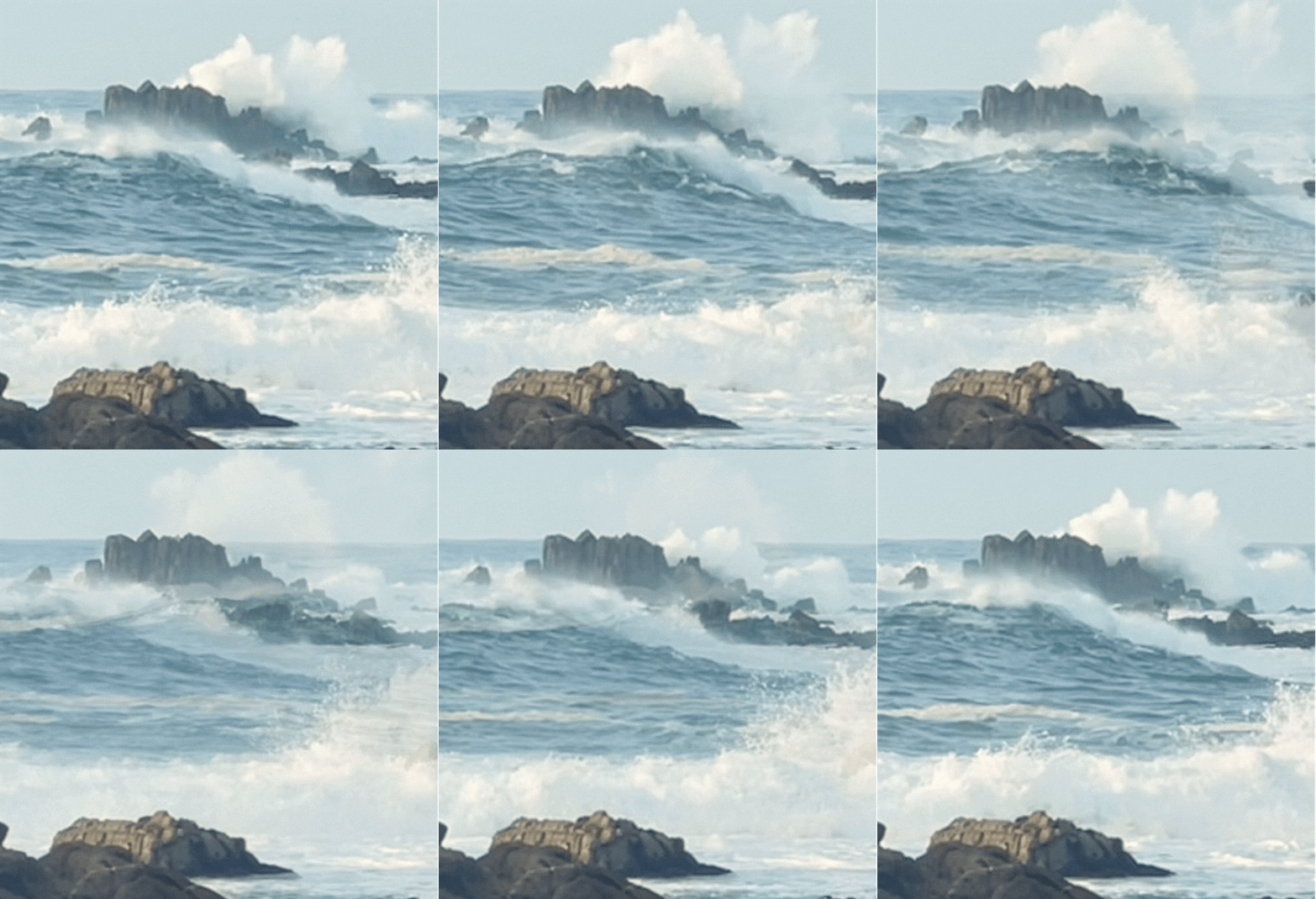
Scene at the Intro of “Big Little Lies”.
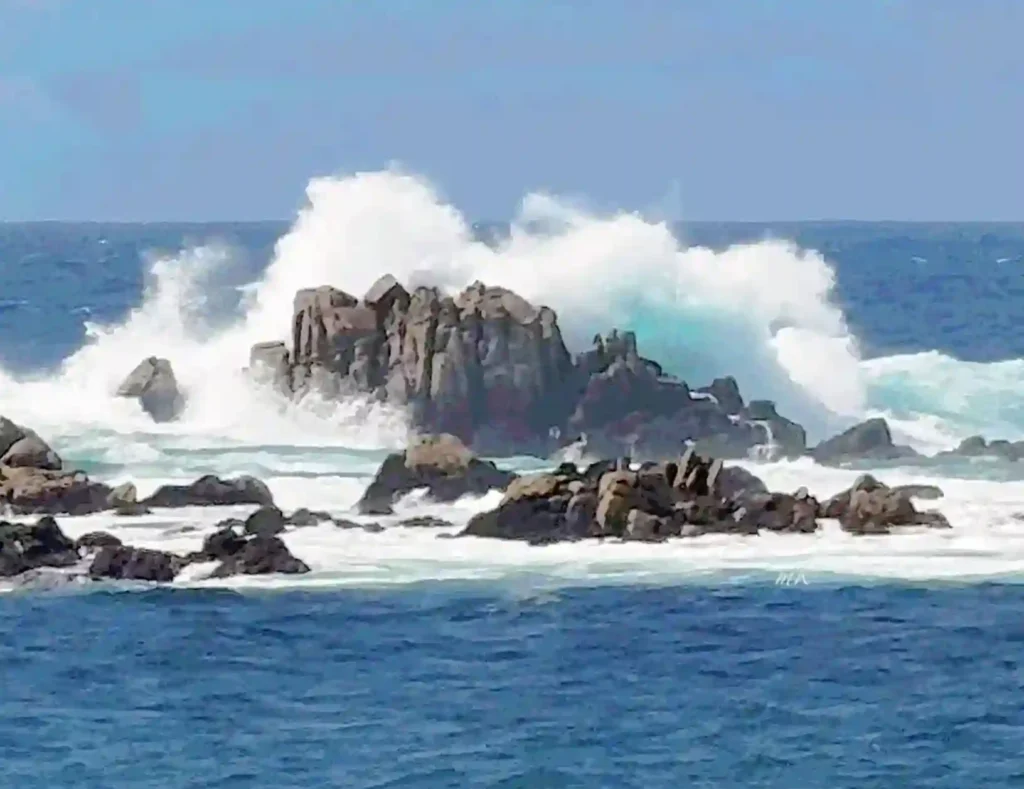
In PG there’s a massive boulder about a hundred feet out in the water, with crashing waves, close to Point Pinos. It has a story. Little did I know growing up, this image of an iconic boulder would be featured at the intro of the TV show “Big Little Lies.”
Imagine sitting for hours, waiting for the perfect monster wave to hit that boulder in the middle of the ocean.
Moss Landing
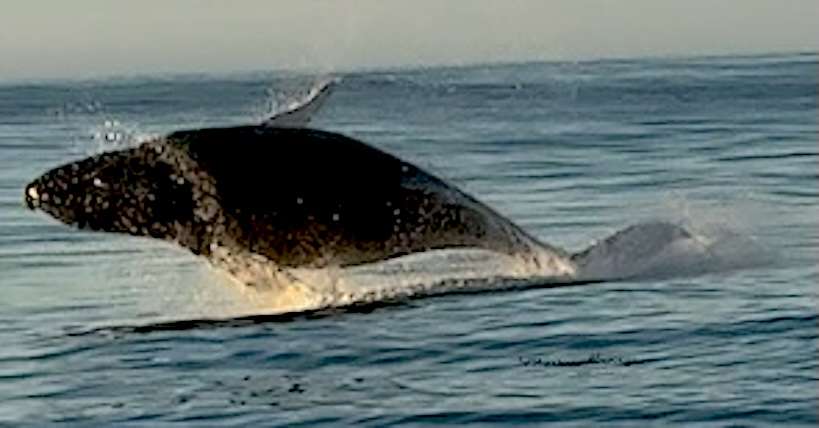
I began to explore how I could interpret nature in action, where they move artistically in my heart. For instance, at Moss Landing, while relaxing and watching my father fish one day, we saw a humpback whale breach right before our eyes.
Hunchback Whale Breaching at the Monterey Bay
What a vision, and startling. Not to mention the scary sea lions in numbers and shore birds appearing a few feet away grabbing my father’s fish. Like theater by the sea, where my dad fished. Imagine, thousands of shore birds flying above the dunes and wetlands.
The Trail at Monterey Bay
Monterey Bay
Back on the Monterey Peninsula Recreation Trail, a novel for a book continues in my mind with words and pictures, that align with my photo journals of abstract art. Lively waves swirl with the sand creating patterns that make you look twice. Imagining.
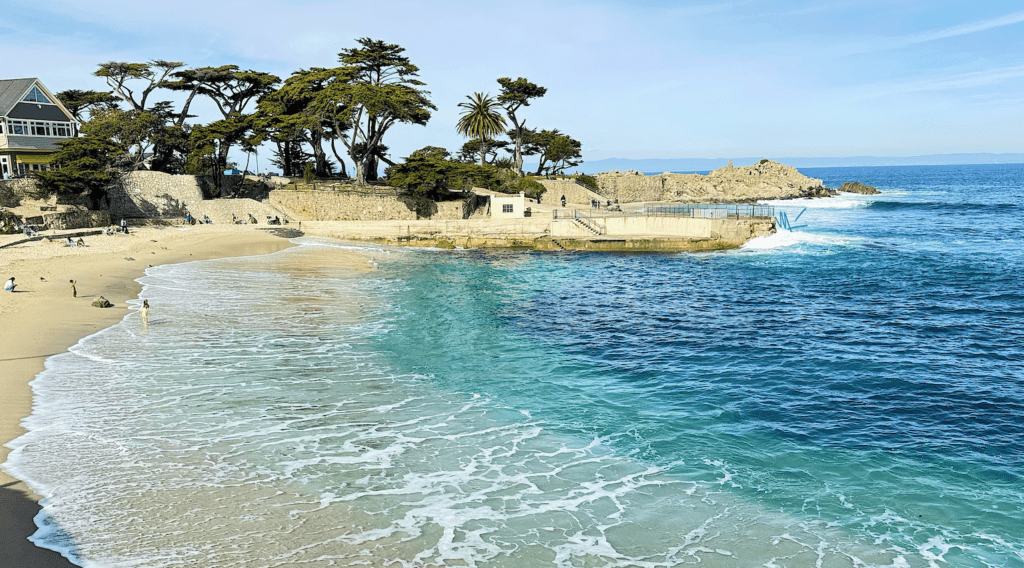
People lounging at Lover’s Point.
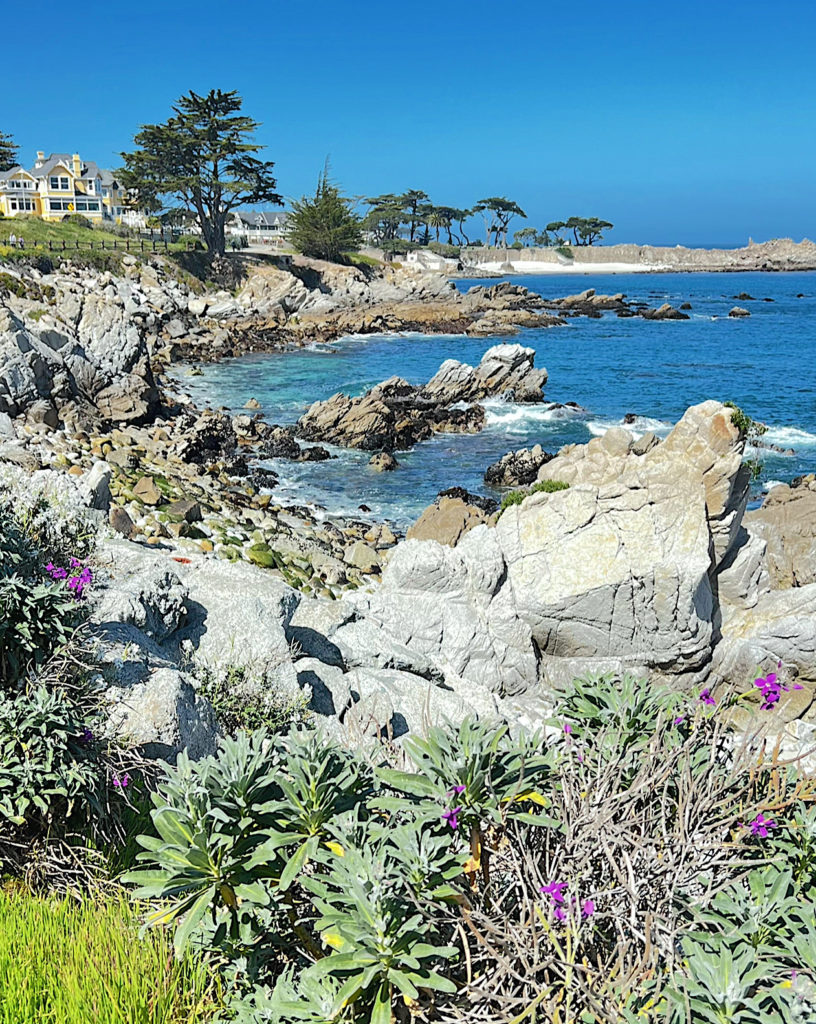
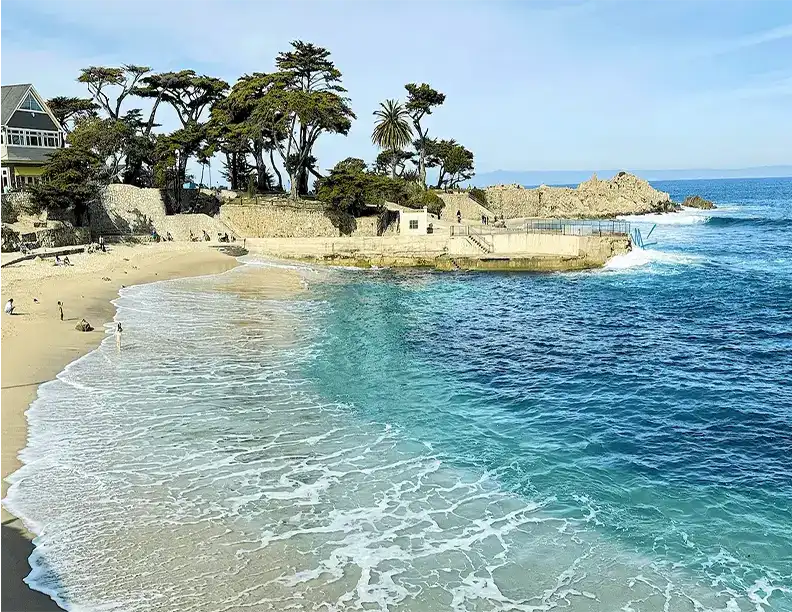
I was captivated by a stunning wave-kissed rocky shore, at the Monterey Peninsula tip, complete with breathtaking sandy dunes.
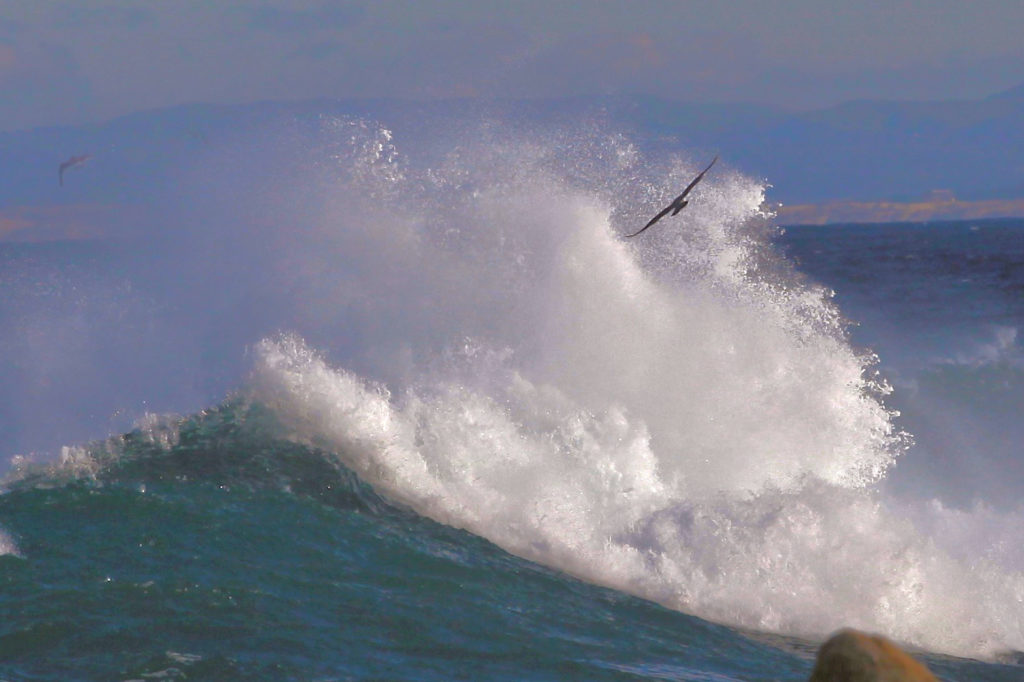
Bird Flying Over an Artistic SeaCalle Lilies and Harbor Seals
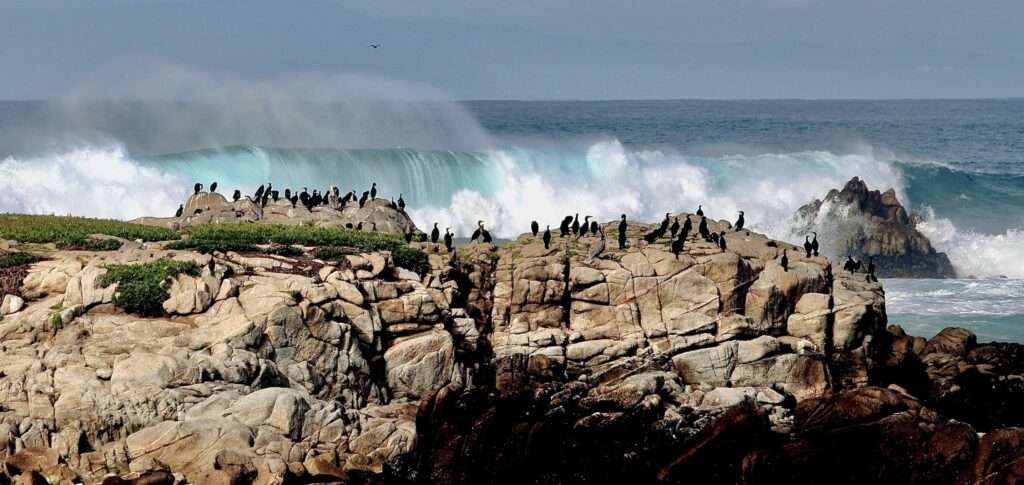
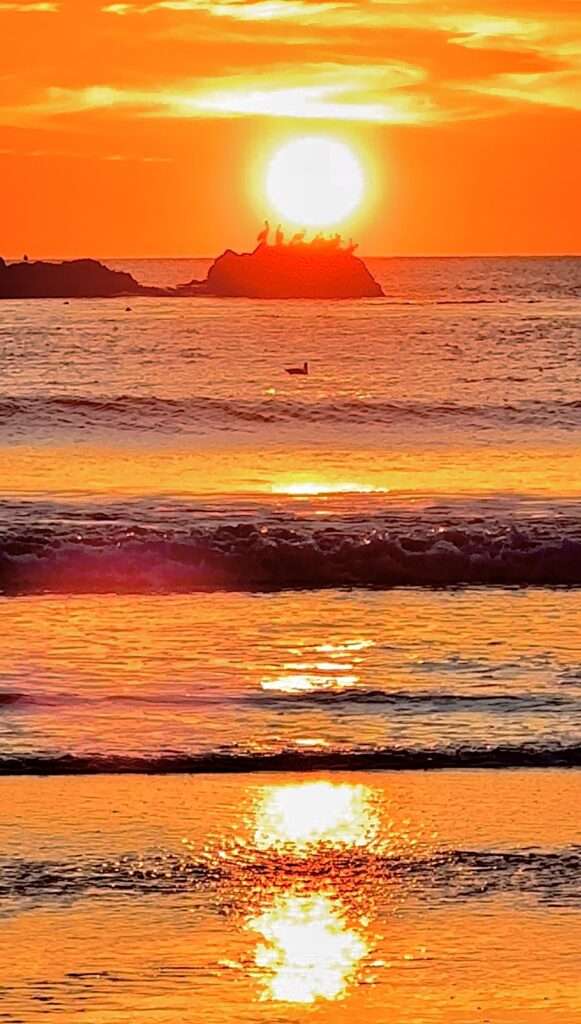
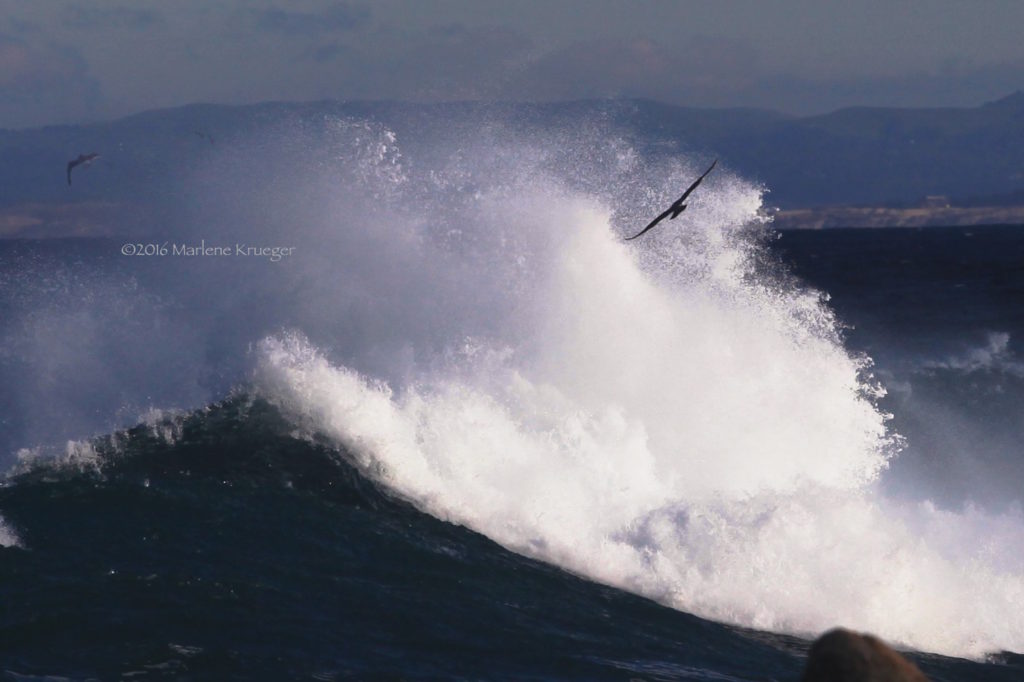
In a heartbeat as the cormorants gather, the crashing waves and rocks are covered in a hazy mist.
Cormorants at High Tide.
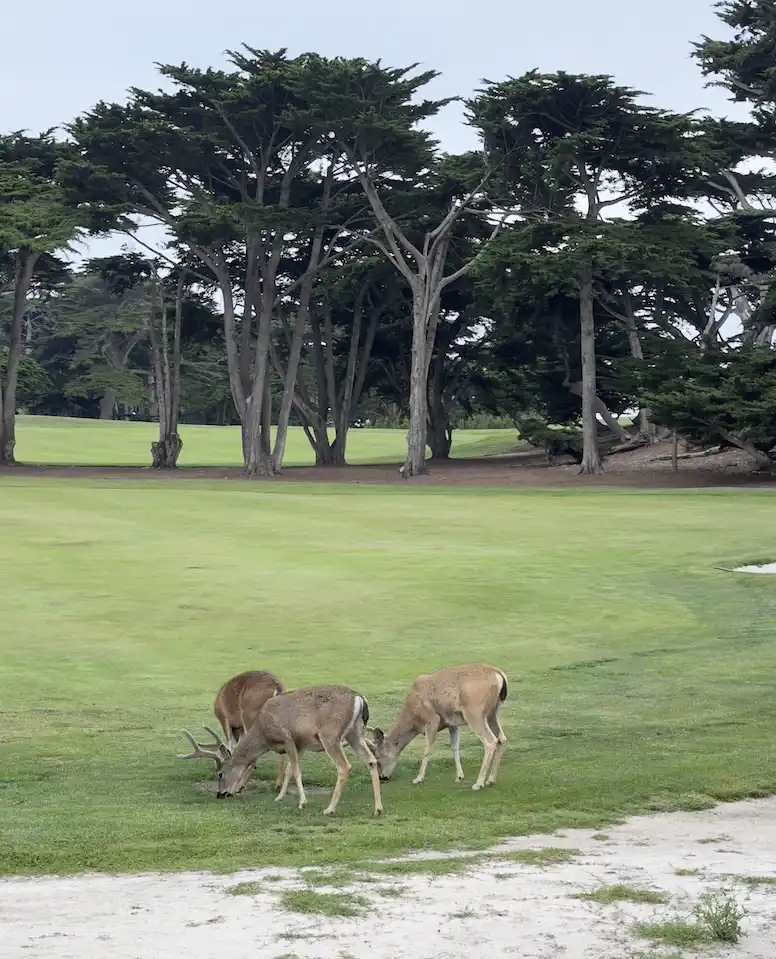
I suddenly found myself walking through the old Del Monte Forest,
Del Monte Forest at Pebble Beach
Lost under the skies and clouds that formed images of people’s faces.
Tall Monterey Pines Trees along a Sloap
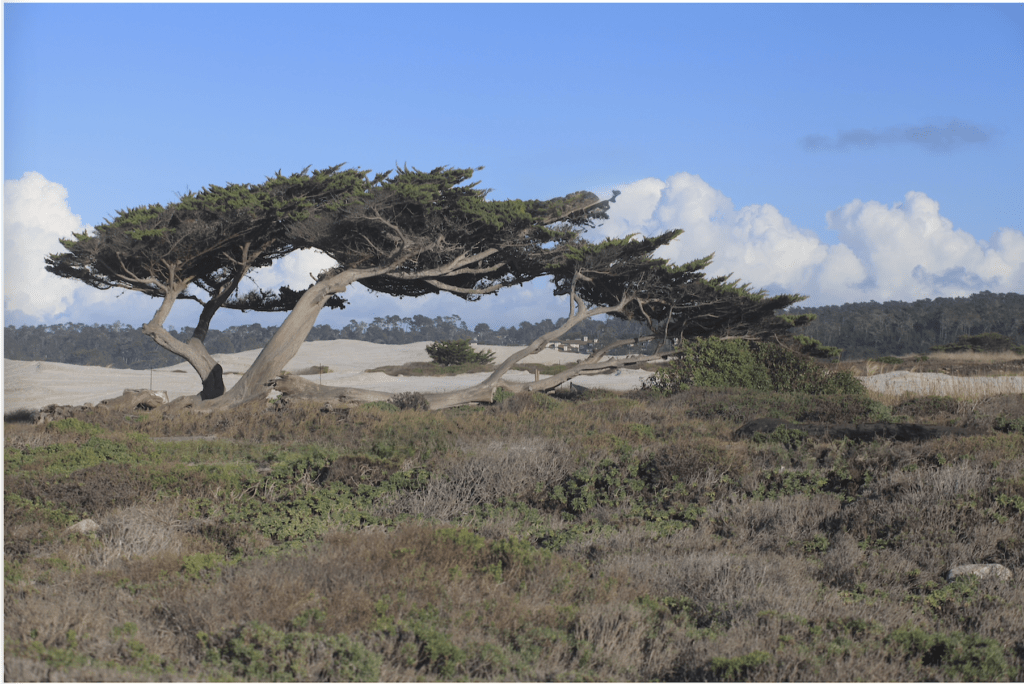
Standing there frozen between the wind swept cypress trees, my heart kept pounding, it’s guiding me to be lost in a tapestry of inspiration.
Carmel
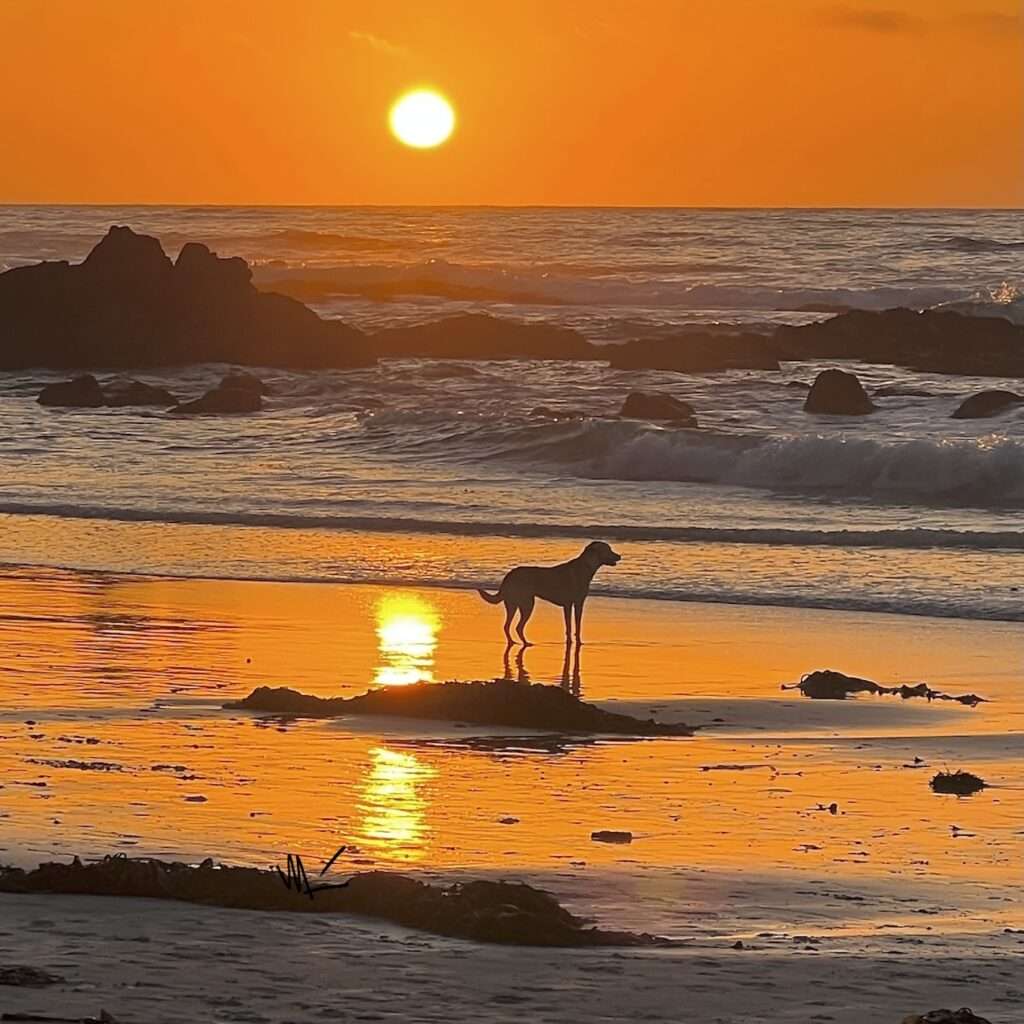
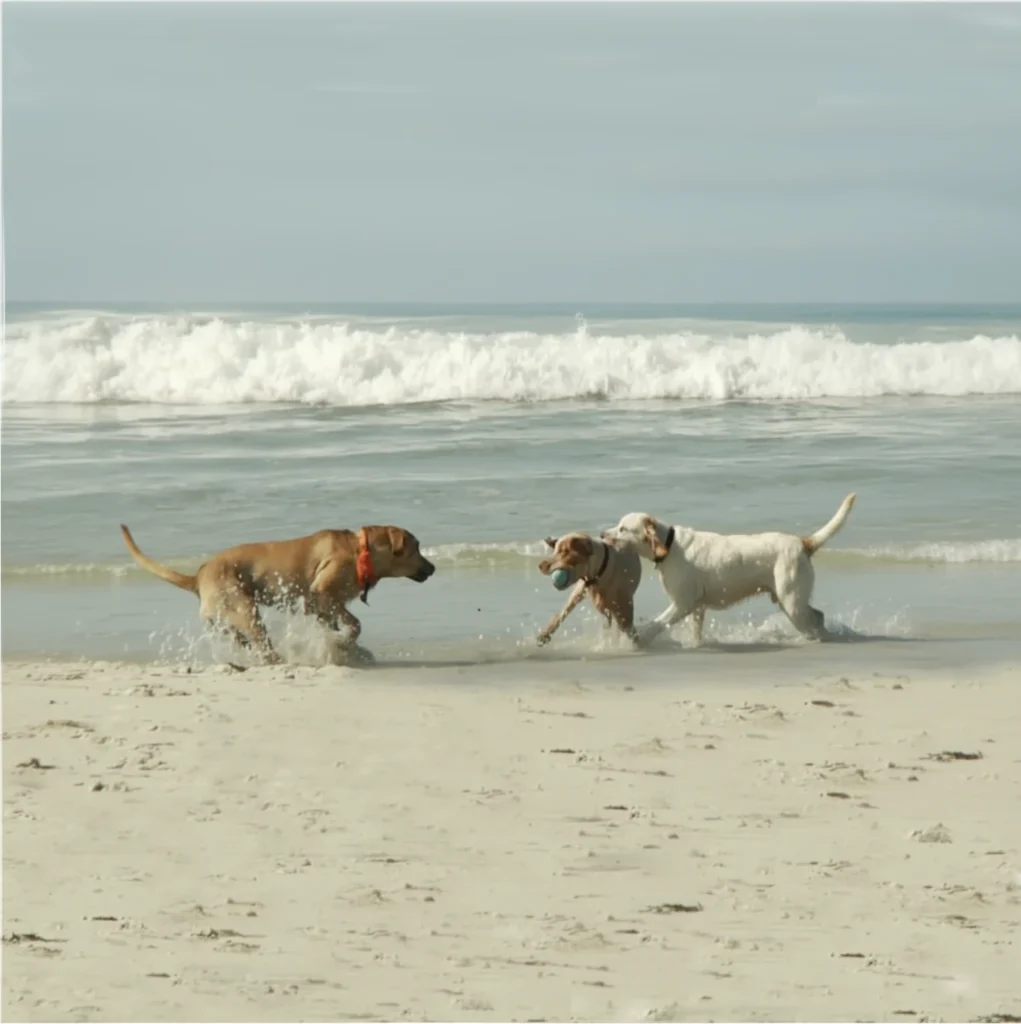
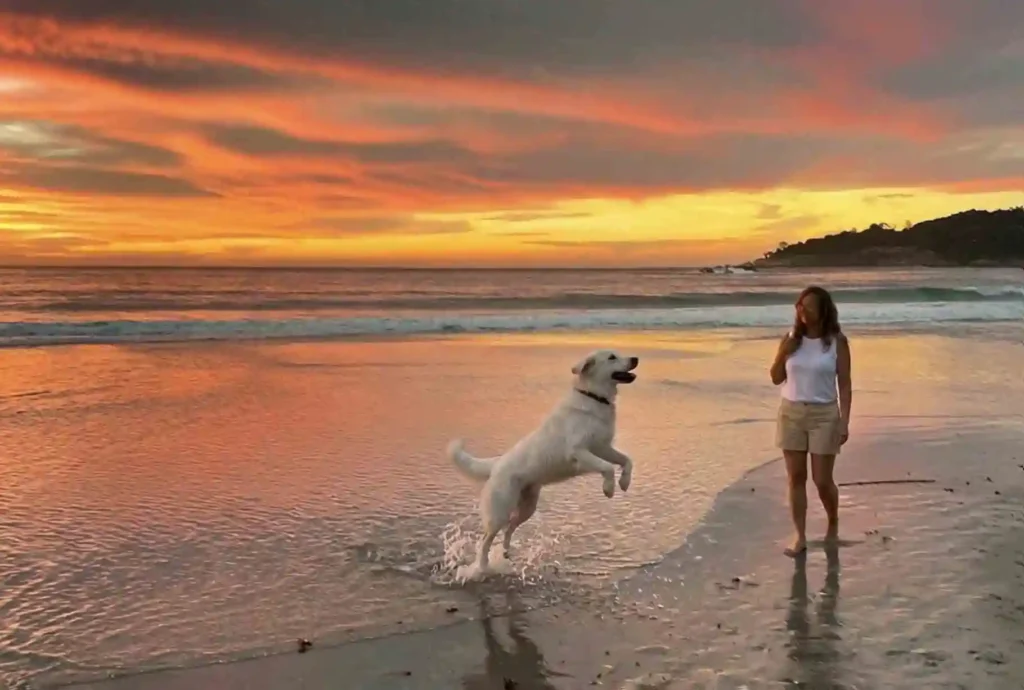
Carmel City Beach where friendly pets sniff my sandy toes, invited me to sit and watch them play with the other dogs.
A Dog Breathing in the Sunset at the ocean.
Surprisingly, today, my walk through this area was fun, just like the dogs playing in the beach here.
Three Dogs at the beach playing on the sand.
As I turn a corner in Carmel, I follow a road down about seventeen steps to Carmel State Beach, photo journaling as I walk.
Dynamic Translucent Sea Green Waves at Carmel Beach
I’m ready to drive to Point Lobos State Reserve, where there are fresh ideas for another photo journal.
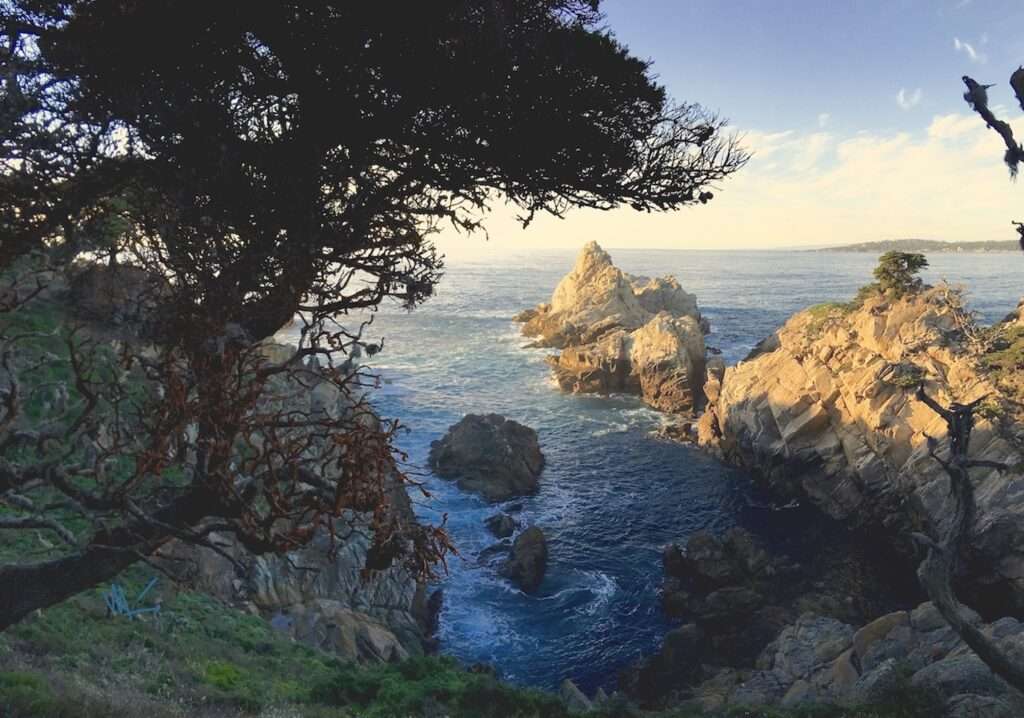
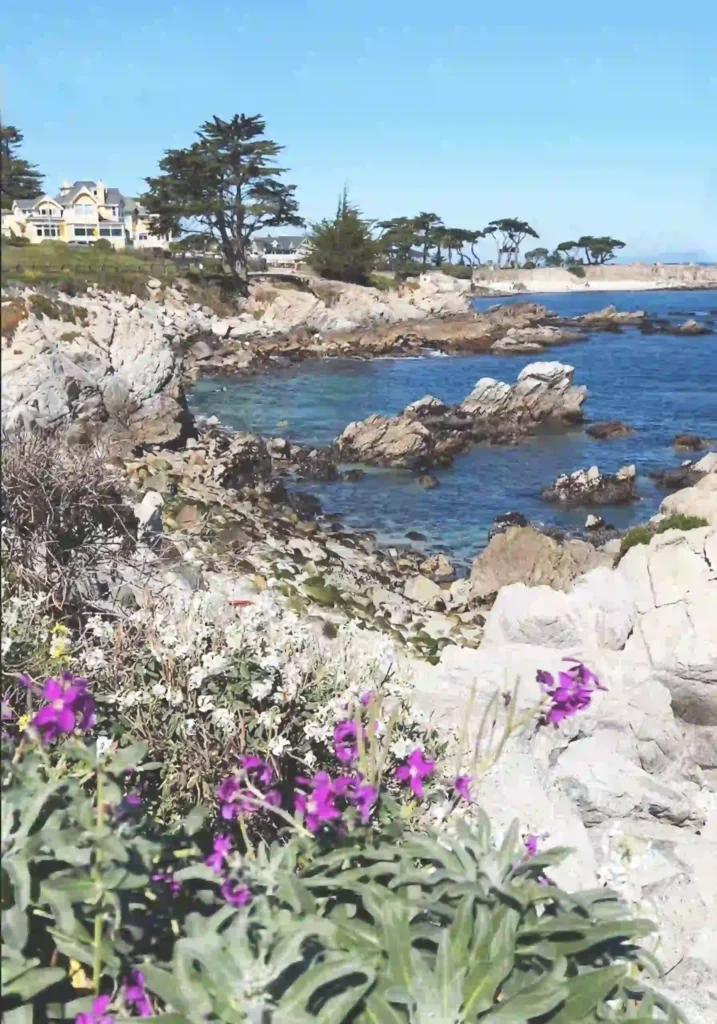
Looking on the Coastal Trail here, there’s a seamless merge of land and water creating an imaginary getaway. Plus, the sun casts all sorts of rainbow-like patterns on everything on the ground, which is ever-changing.
The Whalers Cabin at Point Lobos
Did you know that Point Lobos State Natural Reserve is home to one of the only two remaining native Monterey Cypress forests on Earth? Or that its famous Whalers Cabin sits on a foundation supported by actual whale vertebrae?
Point Lobos with one of the popular boulders
The Whalers Cabin at Point Lobos
Built by early Chinese fishermen in the 1850s, the historic Whalers Cabin at Point Lobos State Natural Reserve is one of the last remaining wood-frame buildings of its kind on the Monterey coast. Tucked away on the cliffs of Carmel lies a humble pine cabin with a massive history. The Whalers Cabin at Point Lobos has been a home to Portuguese whalers, Japanese abalone harvesters, and WWII soldiers.Today, it operates as a museum preserving the region’s rich maritime history.
Point Lobos Museum formerly a fishing house
Inside the Museum: Cultural Artifacts Revealed
When state archaeologists excavated beneath the cabin’s sub-flooring in 1986, they unlocked a treasure trove of multicultural domestic and industrial items. Visitors can explore these key historical displays at the Whalers Cabin Museum:
Whale Vertebrae Foundations: Six massive gray whale vertebrae were discovered under the floorboards, used by early residents as makeshift structural joist supports.
Chinese Domestic Life: Displays feature authentic 19th-century chopsticks, bamboo skewer sticks, and intricately patterned Chinese ceramic and pottery shards.
Abalone Button Workings: Pre-industrial tools and discarded shells highlighting how early Chinese and Japanese settlers manufactured decorative clothing buttons out of iridescent abalone.
Whaling Tools: Harpoons, heavy blubber-cutting knives, and vintage photographs documenting the treacherous operations of the Carmel Whaling Company.
The Outdoor “Try Pots”: Located just outside the cabin, these massive iron cauldrons were used to boil down whale blubber into oil.
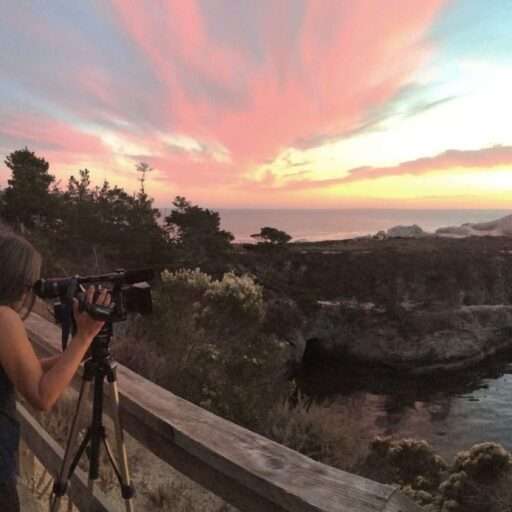
Marlene studies the Effects of Light for a New Prototype
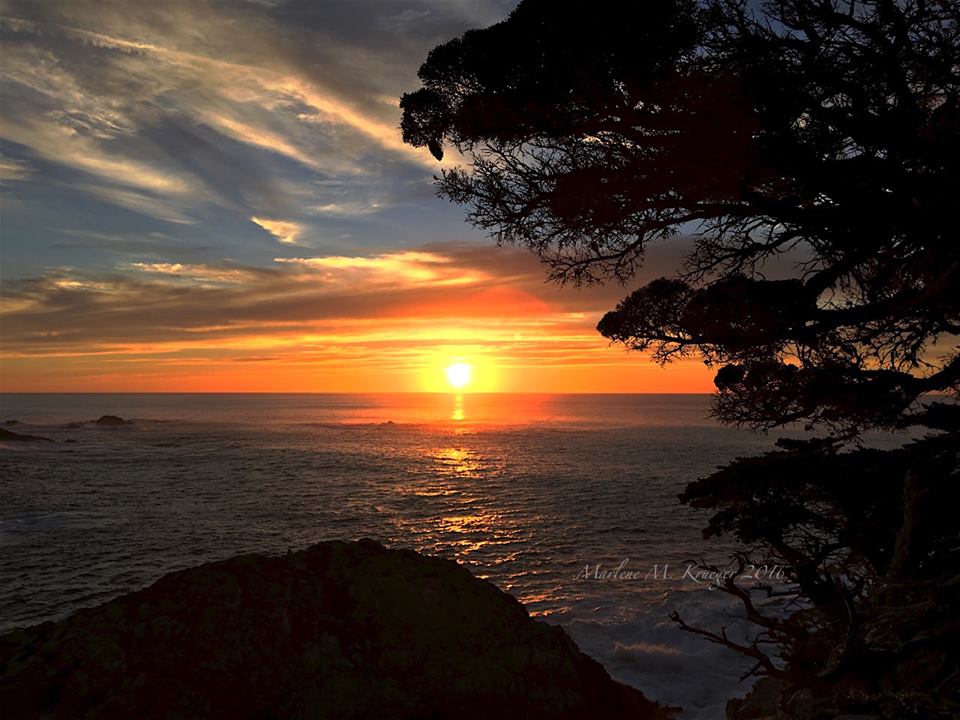
At Point Lobos brilliant red of China Grove at Sunset, opens our minds with the depth of the ocean of imaginary resonance of the sound of the calm.
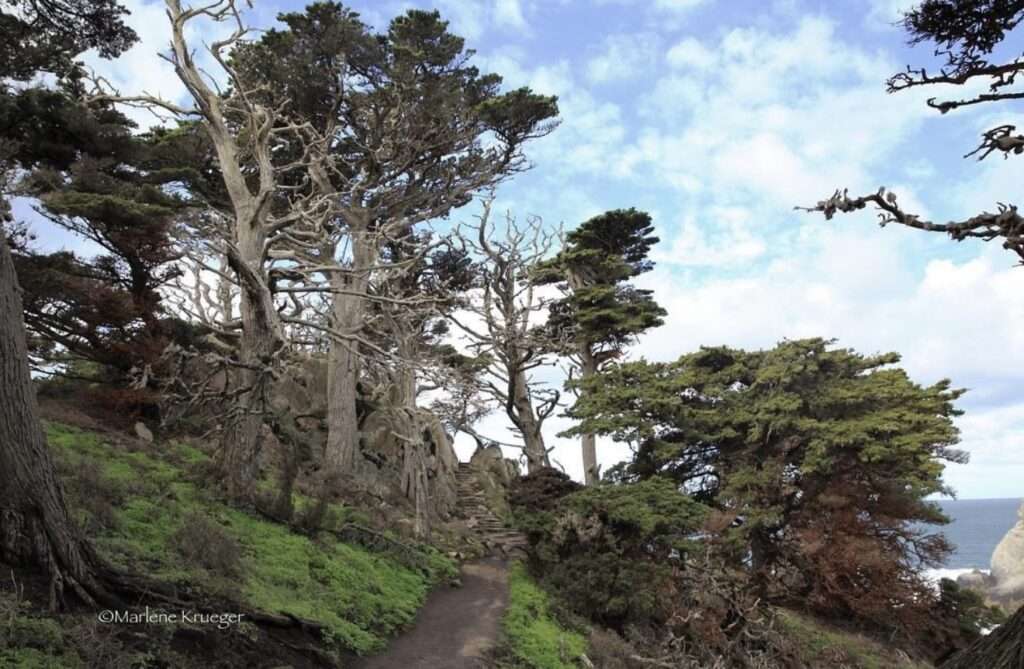
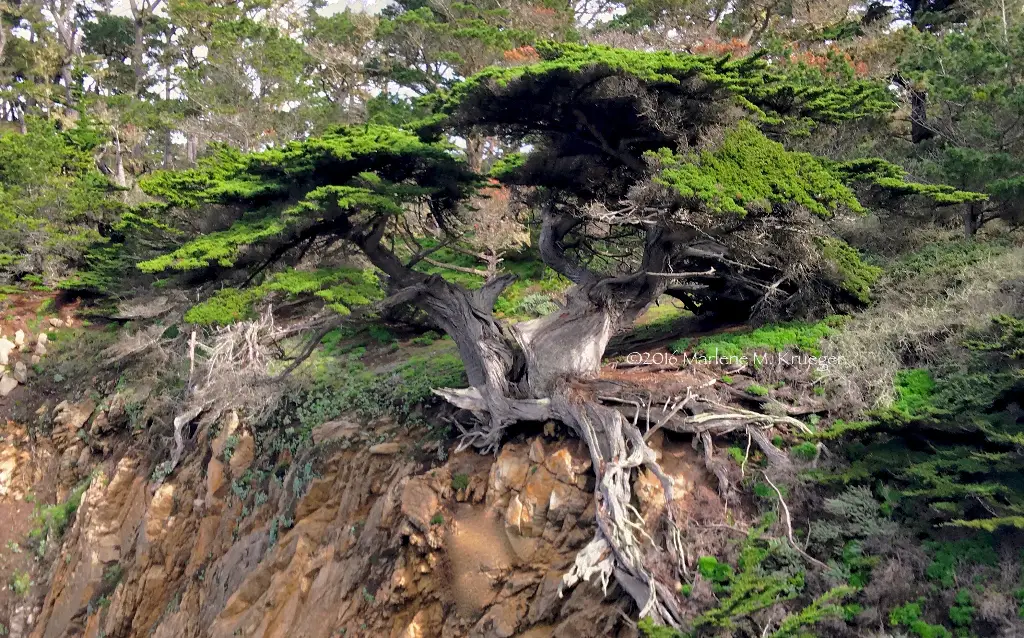
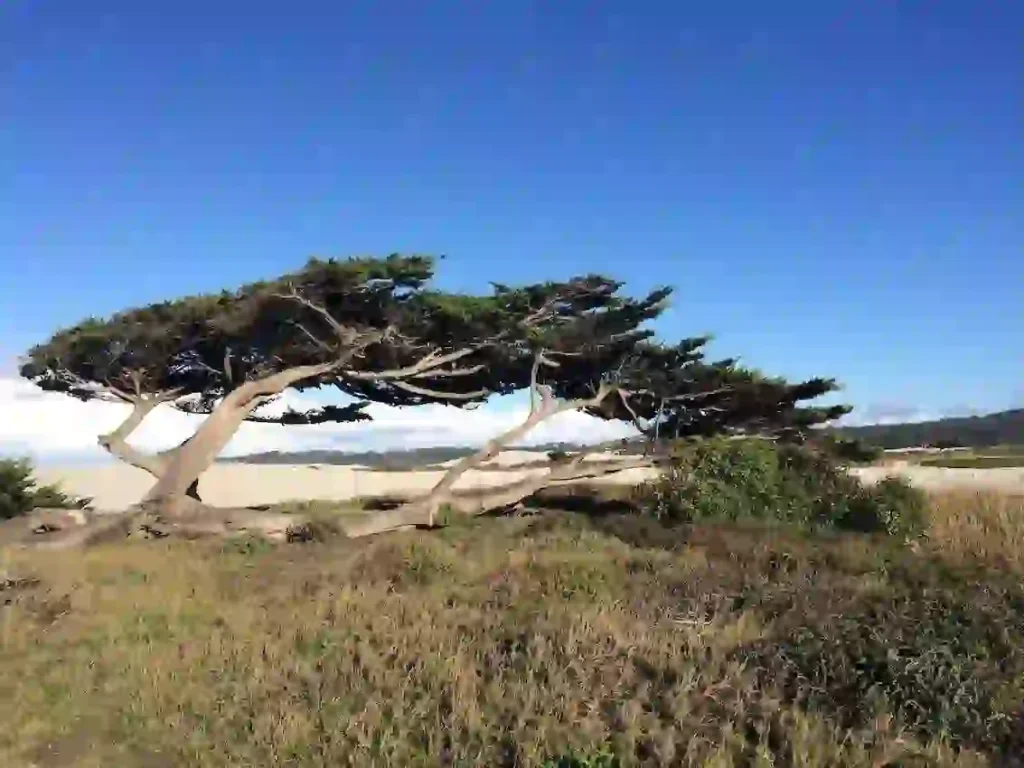
Deeper into the mystery Point Lobos, I came across a windswept cypress tree that framed the the everlasting history that intrigued the indigenous and the predecessors, and their secrets.
Wind-swept Lone Cypress at Point Lobos
Cypress Grove Trail
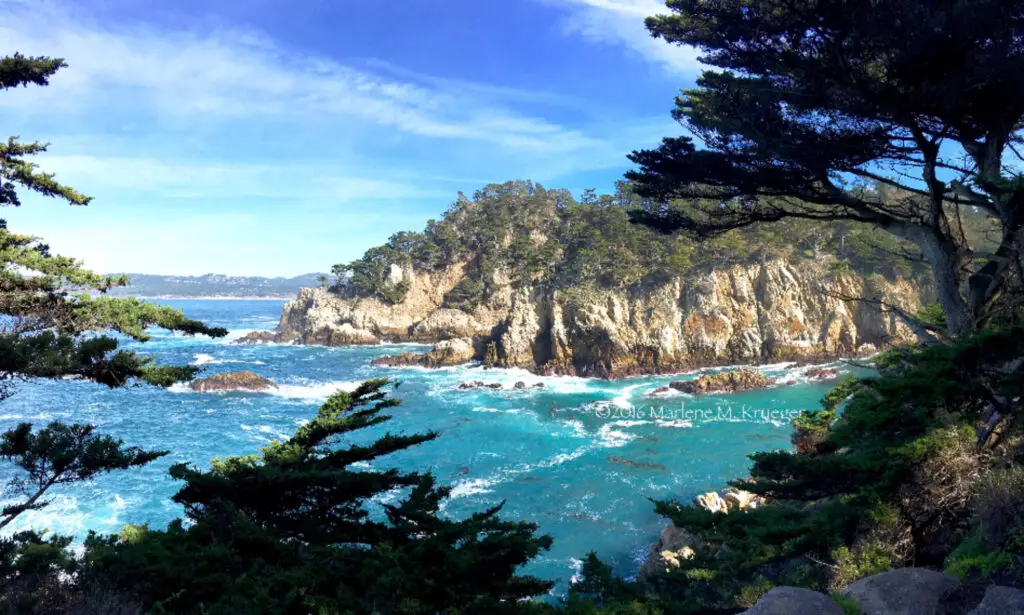
One of only two naturally occurring Monterey Cypress forests left on Earth. Features dramatic ocean cliffs and orange lace lichen
After a brief walk breathing the fresh air, I took a short drive through Highway One, and glanced at the scenery from the shoulder, heading to Garrapata State Park.
Cypress at Veterans Trail by Marlene Krueger
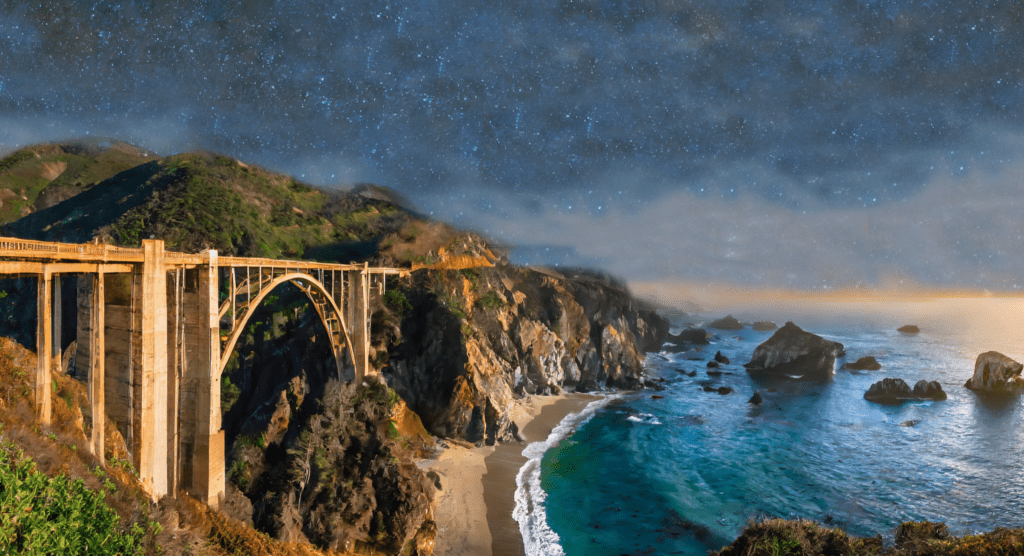
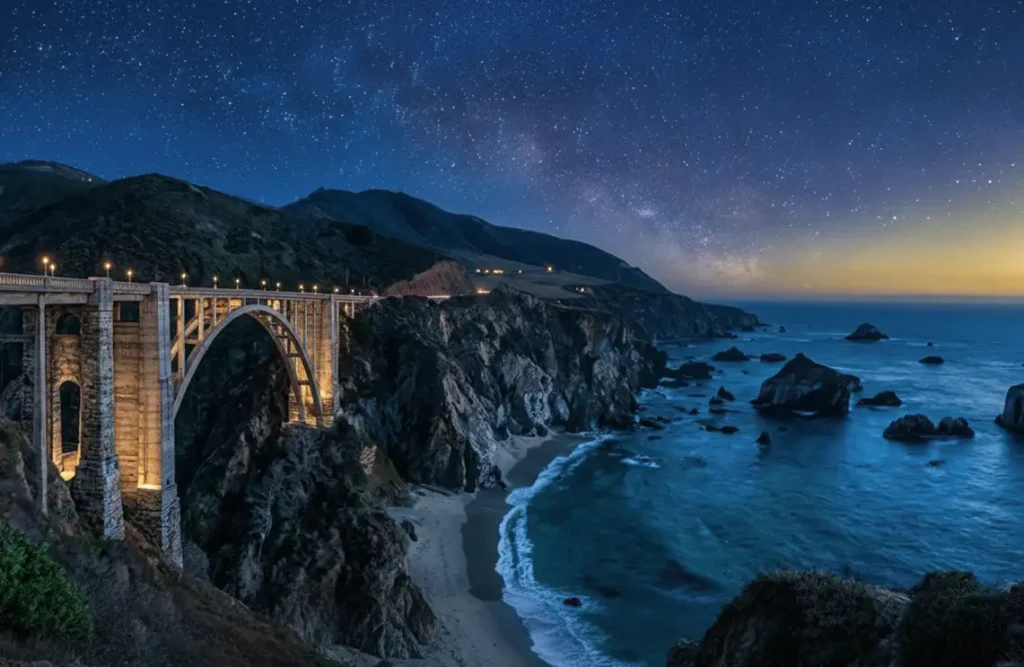
Upon exiting the park, I snapped some photos north and south of the teal-blue horizon below. Afterwards, I head to Big Sur, where Bixby Bridge is approaching, where we pass by another scene that look like the scene in the intro of “Big Little Lies.”
Bixby Bridge at Night
While on a rocky mouth of Bixby Creek, I suddenly got lost on a dusty, rough Old Coast Road. Carefully I maneuver through the unpaved coastal hills and valleys, and then, with a dramatic finish, I’m back to the coast!
Furtheron, I made my way down to the Big Sur River, taking a moment to wander along the shore, slopes, and ridges of Andrew Molera State Park. I figured this would be the ideal spot to jot down my thoughts in the car. Moreover a safe distance from the crowd of people and the possibility of mountain lions or snakes. Afterwards, I continue my drive on Highway One and stop at Pfeiffer Big Sur State Park, where I set up camp enjoying the serenity..
I’m about to head back on Highway One, when suddenly I see a peak that I think’s perfect for California’s Coastal Trail Blazers. Located beyond a coastal range where the Ventana Wilderness reaches its highest point, crossing Cone Peak. This peak is the highest on California’s coastline, standing at just over five thousand feet.
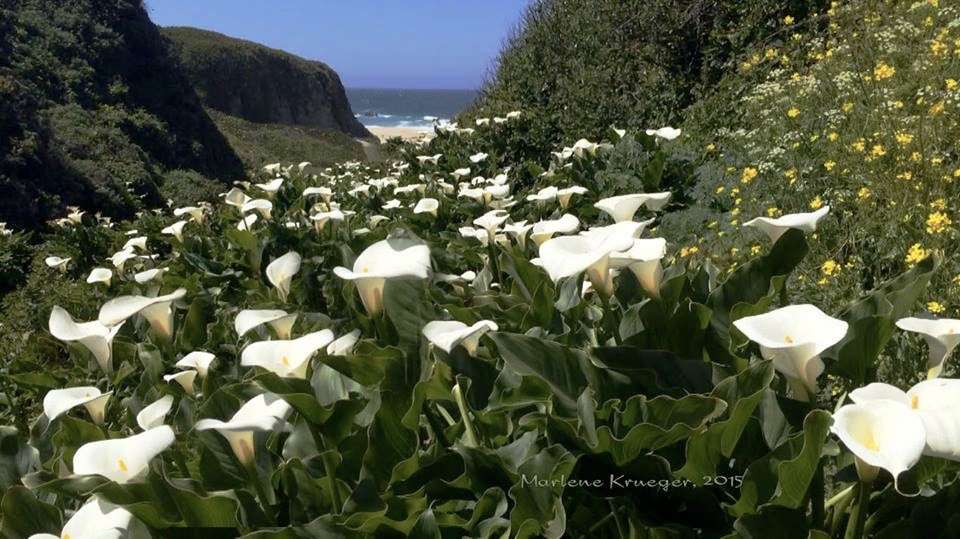
In addition, it’s high enough and scenic enough to be worth a visit, located beyond a coastal ridge. Most interesting is how the lower route of Big Sur offers a highway-shoulder alternative. And when these routes intersect, they provide a 27-mile stretch of coastal Monterey County to explore, including Doud Creek, which is filled with Calle Lillies. But not this year, someone vandalized the area. So the flowers are destroyed.
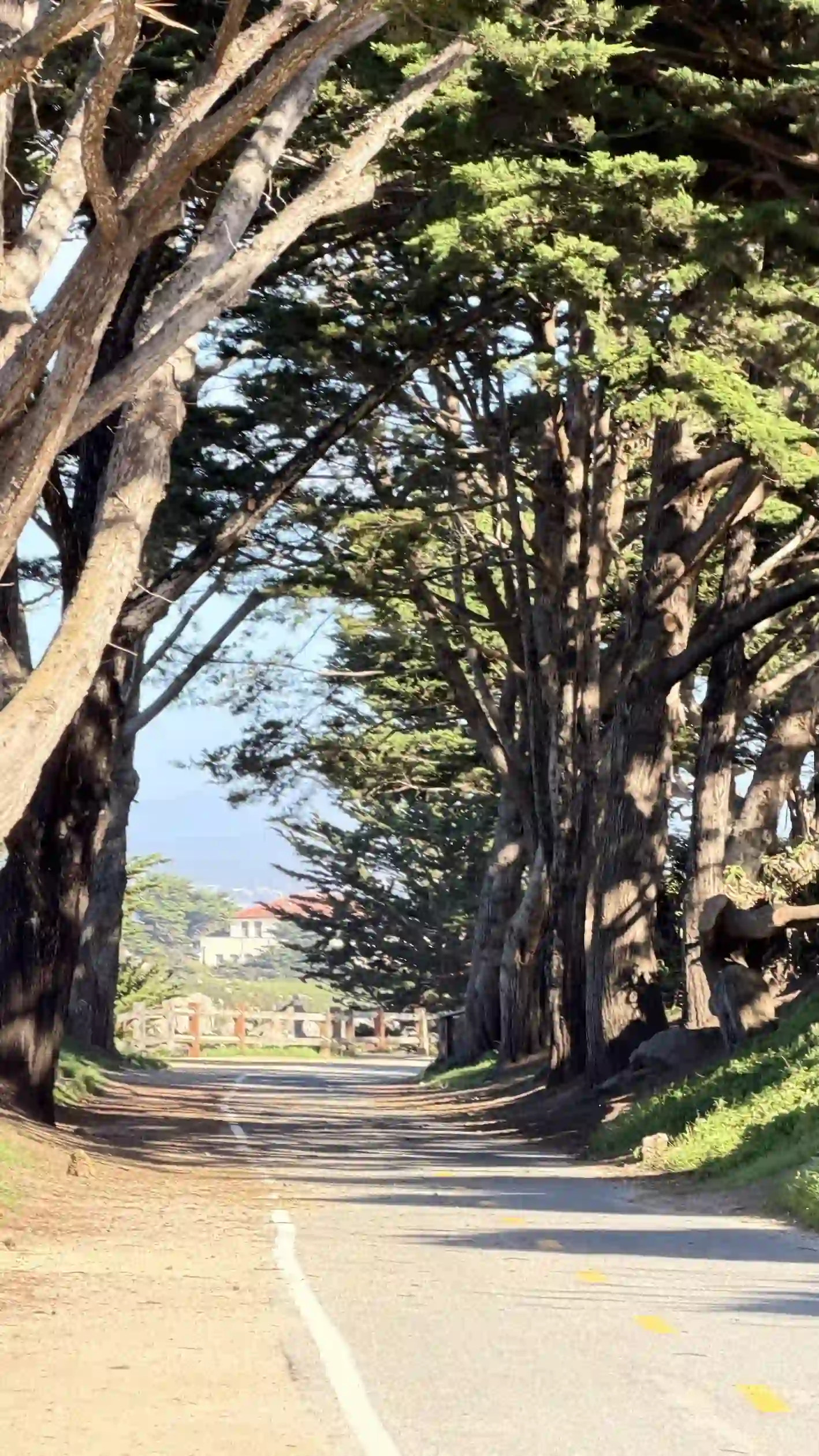
Continuing south on Highway One, beams of light streamed through the majestic tall trees along the roadside. As we can see, there’s lovely beams of light through the tall Cypress trees from the afternoon sun, filtered by shades that let you know you’re in Big Sur.
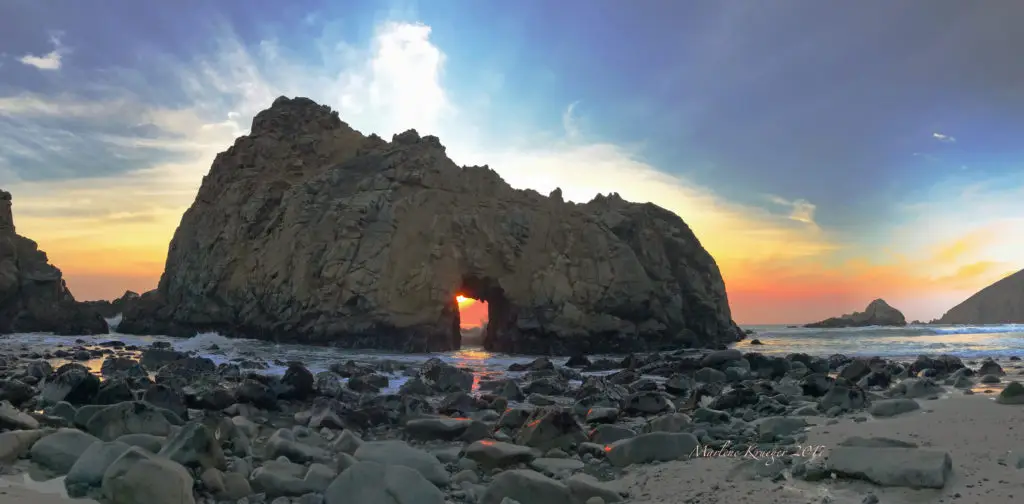
Upon arrival at Pfeiffer Beach, where the huge boulder-like tower that everyone loves photographing at sunset sits, like between crashing waves, beach and wavy trails of purple marbling on the sand. Right below my bare feet — freezing masterpieces.
Key Hole through a large Rock at Phiefer Beach
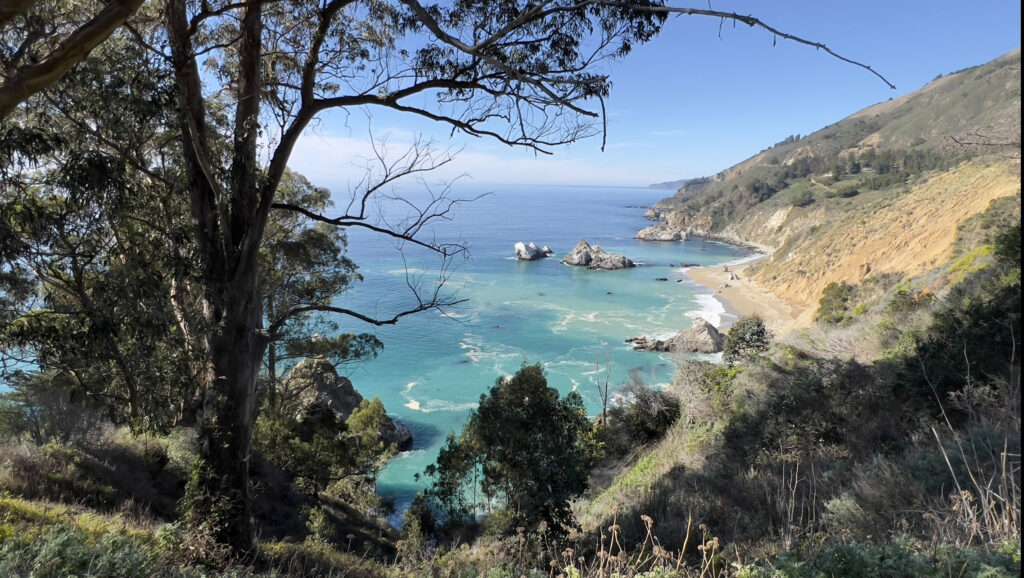
Thunderous crashing waves, was sort of like a Philip Glass arrangement, as if they were choreographed. I got a peek through the keyhole where the winter sun sparkled. I only took a few close up shots, before more people arrive. Eventually I was ready to leave driving south, for a quick walk at Julia Pfeiffer’s McWay Falls, to soak in all the sights and sounds. That teal is so unreal. But it’s real.
Finally, I drive passing the tiny town of Gorda. In minutes, I turned into Kirk Creek Campground. Mesmerized as I checked in. It’s time to search for my spot, next to a beach fifty feet below. It’s only a few feet away and looking down are the crashing waves. So this is where I rest. I lie on my back half-asleep, staring at a millions bright stars above that lit up the whole campground.
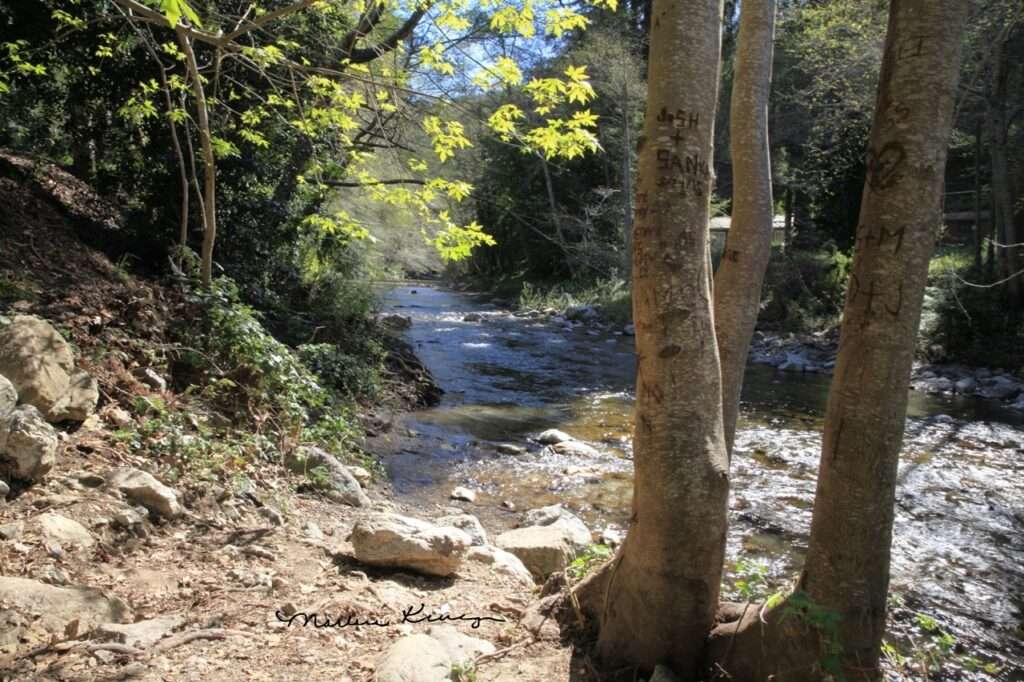
The morning began with the gentle sound of a raccoon rummaging through a garbage can, heralding the dawn of a new adventure. As I strolled along Willow Creek, the glimmering waters captivated my senses, guiding me toward the ocean.
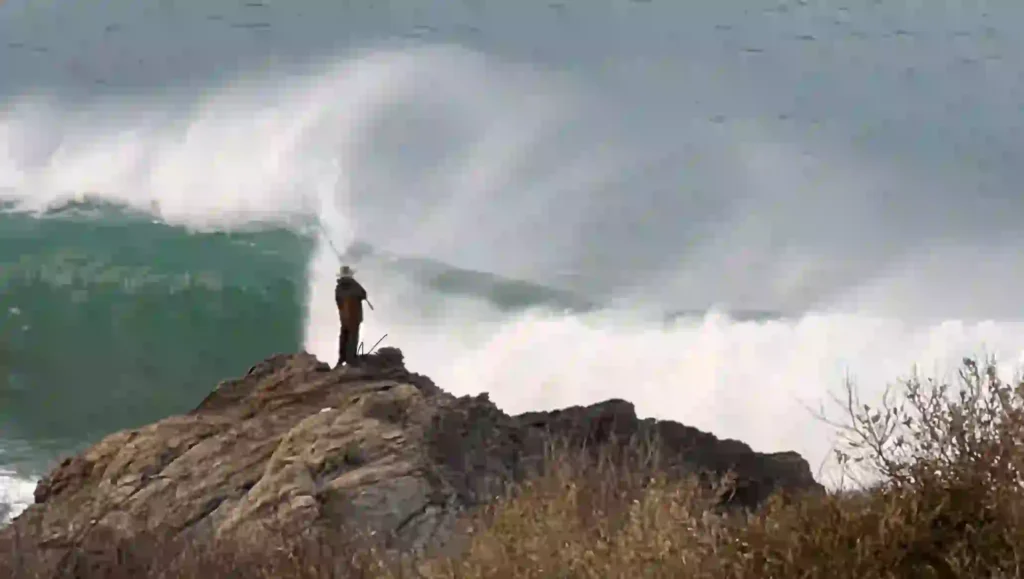
The sight of a solitary fisherman perched precariously on a towering boulder amid the crashing waves evoked a mixture of awe and apprehension.
Search for Salmon Creek
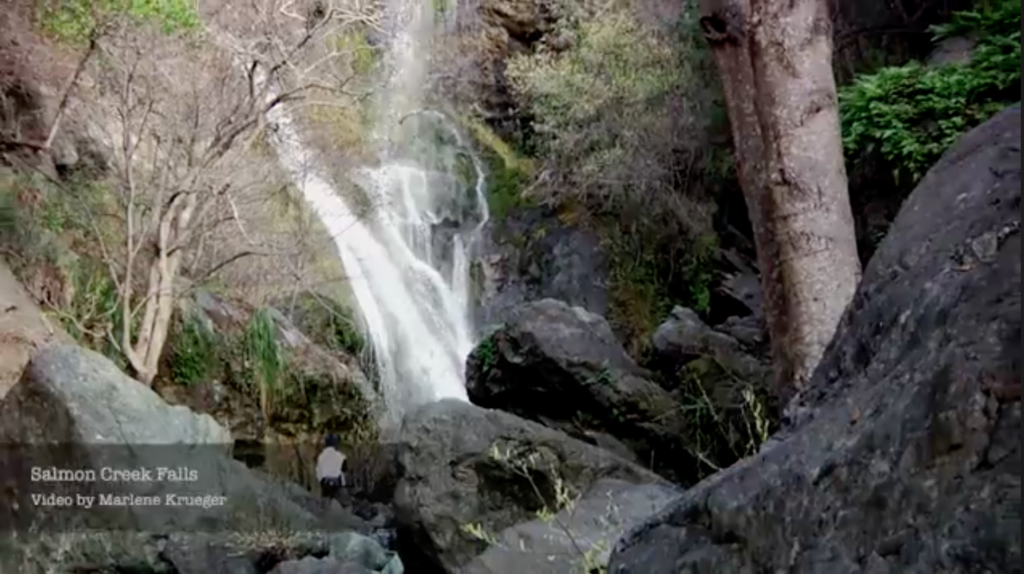
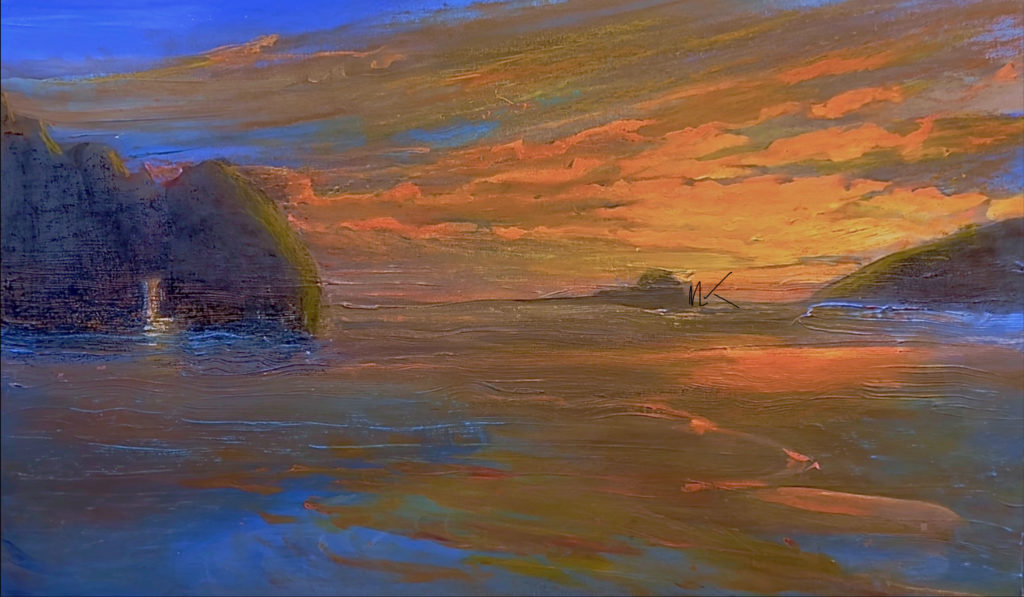
After a fruitless search for jade at Jade Beach, I continued southward to capture the breathtaking waterfall visible from Highway One at Salmon Creek, its soothing cascade resonating beautifully in the tranquil setting. My journey concluded with a reflective drive home, where the setting sun painted the sky in vibrant hues.
A photo Journal is like the magic of telling stories through pictures, where photography and journalism dance together beautifully. It mainly captures what’s happening now and the stories that make us human.
Overlooking the John Hopkins Marine Lab
This is were we begin, as we capture history at Lover’s Point where art meets marine science in Monterey, behind the iconic view at Lover’s Point in Pacific Grove, featuring Dorothy Fowler’s bronze statue, Stanford’s Hopkins Marine Station, and the Monterey Bay Aquarium.
A peaceful, moody view of a tranquil Monterey Bay
The tranquil shoreline meets soft, rolling Pacific waves under the afternoon sky. In a distance, wind-swept ancient cypress trees stand guard along the rugged California coastline.
At the shoreline public parks, it’s easy to sit and mesmerize. Just imagine a deep canyon the size of the Grand Canyon, at the tip of my toes, underneath the Monterey Bay.
A Place to gather with family
Misty Morning Serenity at Monterey Bay
At Monterey Beach, kayakers get ready for a long excursion starting at the crack of dawn, where the calm water glistens as the morning sun rises, and a light, hazy fog pierces through the cypress trees, creating an aura reminiscent of a classic 1950s mystery movie.
Where the forest meets the sea—a quiet, misty morning on the California coast.
In the foreground, a sillouette of three mesmerized visitors gaze up, glaring at an illuminating light show of life at the marine sanctuary on Cannery Row. The blue shades and values glow at the Monterey Bay’s community tank.
Hundreds of Pacific bluefin tuna, swirling schools of sardines, a pelagic stingray, and a green sea turtle glide through the million-gallon open sea exhibit, visitors are mesmerized for hours.
This underwater photograph captures a massive school of shimmering sardines creating synchronized displays with a halation of darting Pacific bluefin tuna, a gliding pelagic stingray, and a gentle teal green sea turtle.
Sea otter staring at us at the Monterey Bay Aquarium.
The reflecting lights guide me in wander through the Monterey Bay Light show, where I had a chance to look eye to eye at a sea otter staring at me. The luminous jellyfish paced with me as I gaze at the brightly lit sardines, tuna, and sea turtles, flow with a hypnotic pace that you just wish to flow with them.
Scene at the Intro of “Big Little Lies”.
At Pacific Grove there’s a massive boulder about a hundred feet out in the water, with crashing waves that display a rainbow-like mists, close to Point Pinos. Little did I know growing up, this image of an iconic boulder would be featured at the intro of the TV show “Big Little Lies.”
Hunchback Whale Breaching at Monterey, Ca
Moss Landing
My mind wondered with colors dispersing before my eyes across the Monterey Bay towards Moss Landing. As I day dreamed, I was taken back to the days watching my father fish. Remembering the humpback whale that breach right before our eyes.
What a vision, the rainbow splashed from its’ torso. Not to mention the scary sea lions in numbers and shore birds appearing a few feet away grabbing my father’s fish. Theatrics by the sea with shiny colors reflected everywhere. Imagine, thousands of shore birds flying above the dunes and wetlands.
Monterey
Back on the Monterey Peninsula Recreation Trail, a novel for a book continues in my mind with words and pictures, that align with my photo journals of abstract art. Lively waves swirl with the sand creating patterns that make you look twice for the after-imagines.
The Waves Flowing Artistically
I was captivated by a stunning wave-kissed rocky shore, at the Monterey Peninsula tip, complete with breathtaking sandy dunes.
Large Wave at Pacific Grove
In a heartbeat as the cormorants gather, the crashing waves and rocks are covered in a hazy mist.
Cormorant by Splashing Waves
I suddenly found myself walking towards the old Del Monte Forest,
Foraging Toward Del Monte Forest
Lost under the skies and clouds that formed images of people’s faces.
Dense forest with ancient Monterey Pines and Monterey Cypress
Standing there frozen between the wind swept cypress trees, my heart kept pounding, it’s guiding me to be lost in a tapestry of inspiration.
Carmel
Carmel City Beach where friendly pets sniff my sandy toes, invited me to sit and watch them play with the other dogs.
Playful Dogs Unleashed
Surprisingly, today, my walk through this area was fun, just like the dogs playing in the beach here.
Marlene Krueger | a Step in Time
As I turn a corner in Carmel, I follow a road down about seventeen steps to Carmel State Beach, photo journaling the sun through the luminous waves.
Translucent-Waves-of-Carmel
I’m ready to drive to Point Lobos State Reserve, where there are fresh ideas for another inspiring light project.
Looking on the Coastal Trail here, there’s a seamless merge of land and water creating an imaginary haze. Plus, the sun casts all sorts of rainbow-like patterns on everything on the ground, which is ever-changing.
Point Lobos
Upon exiting the beach, I snapped some photos north and south of the teal-blue horizon below.
Point Lobos Cypress Trees at Sunset
At Point Lobos there’s a brilliant red light show at China Grove at Sunset. The illumination opens our minds with the depth of the ocean of imaginary resonance of the calm.
Marlene studies the Effects of Light for a New Prototype
The Whalers Cabin at Point Lobos
Did you know that Point Lobos State Natural Reserve is home to one of the only two remaining native Monterey Cypress forests on Earth? Or that its famous Whalers Cabin sits on a foundation supported by actual whale vertebrae?
Deeper into the mysterious Point Lobos, I came across a windswept cypress tree that framed the everlasting history that intrigued the indigenous and the predecessors, and their secrets.
Cypress Grove Trail
One of only two naturally occurring Monterey Cypress forests left on Earth. Features dramatic ocean cliffs and orange lace lichen
After a brief walk breathing the fresh air, I took a short drive through Highway One, and glanced at the scenery from the shoulder, heading to Garrapata State Park.
Cypress at Veterans Trail by Marlene Krueger
Afterwards, I head to Big Sur, where Bixby Bridge is approaching, where we pass by another scene that look like the scene in the intro of “Big Little Lies.”
Bixby Bridge at Night
While at a rocky mouth of Bixby Creek, I suddenly got lost on a dusty, rough Old Coast Road. Carefully I maneuver through the unpaved coastal hills and valleys, and then, with a dramatic finish, I’m back to the coast!
In an instant, I made my way down to the Big Sur River, taking a moment to wander along the shore and ridges of Andrew Molera State Park. I figured this would be the ideal spot to jot down my thoughts in the car. Moreover, a safe distance from the crowd of people and the possibility of mountain lions or snakes.
And when these routes intersect, they provide a 27-mile stretch of coastal Monterey County to explore, including Doud Creek, which is filled with Calle Lillies. But not this year, someone vandalized the area. So the flowers are destroyed.
Continuing south on Highway One, beams of light streamed through the majestic tall trees along the roadside. As we can see, there’s lovely beams of light through the tall Cypress trees from the afternoon sun, filtered by shades that let you know you’re in Big Sur. I continue my drive on Highway One and stop at Pfeiffer Big Sur State Park, where I set up camp enjoying the serenity.
Upon arrival at Pfeiffer Beach, where the huge boulder-like tower that everyone loves photographing at sunset between crashing waves, beach and wavy trail of purple marbling on the sand.
Key Hole through a large Rock at Phiefer Beach
Thunderous crashing waves, was sort of like a Philip Glass arrangement, as if they were choreographed. I got a peek through the keyhole where the winter sun sparkled.
I only took a few close up shots, before more people arrive. Eventually I was ready to leave driving south, for a quick walk at Julia Pfeiffer’s McWay Falls, to soak in the sights and sounds. That teal is so unreal. But it’s real.
McWay Falls on a Cool Spring Day
Finally, I passed through the tiny town of Gorda. In minutes, I turned into Kirk Creek Campground, mesmerized as I checked in. It’s time to search for my spot, next to a beach fifty feet below. Looking down are the crashing waves of the Pacific Ocean. So this is where I rest. I lie on my back half-asleep, staring above at millions bright stars that lit up the whole campground.
Relax and Enjoy!
The morning began with the gentle sound of a raccoon rummaging through a garbage can, heralding the dawn of a new adventure. As I strolled along Willow Creek, the glimmering waters captivated my senses, guiding me toward the ocean.
The sight of a solitary fisherman perched precariously on a towering boulder amid the crashing waves evoked a mixture of awe and apprehension.
Search for Salmon Creek
Step into Salmon Creek Falls
After a fruitless search for jade at Jade Beach, I continued southward to capture the breathtaking waterfall visible from Highway One at Salmon Creek, its soothing cascade resonating beautifully in the tranquil setting. My journey concluded with a reflective drive home, where the setting sun painted the sky in vibrant hues.
The Monterey Bay Aquarium offers a serene sanctuary where the rhythmic, sun-dappled sway of the kelp forest induces a meditative calm. This tranquil environment, reminiscent of the slow, underwater tempo of ocean currents, serves as a powerful model for creating focused learning spaces. By mimicking this calming ambiance in a classroom setting through kinetic lighting, the hectic, high-stress energy of students can be transformed into a peaceful, engaged, and receptive state of wonder.
After driving 58 miles south of Monterey, hikers can view Salmon Creek Waterfalls at Big Sur minutes from the highway. In order to park, you would have to search for a horseshoe shaped turn. It can be tricky to locate. If you are lucky to find the area, you can see cars parked along the highway.
The drive can be a treacherous adventure with falling rocks, mudslides, not to mention finding a safe parking space to see Salmon Creek Waterfall up close.
If you are hiking from the highway, the Salmon Creek waterfalls can be seen about a third of a mile. The falls are on the boundary of the Salmon Creek Trail and the Silver Peak Wilderness. We hiked on the trail to the waterfalls that thundered on the boulders. We took our time climbing on the boulders to get closer to the sound of the crashing waves of water. We sat and relaxed for an hour and half.
Be sure to check before traveling and searching the falls. The storm and rainfall around the waterfalls can cause road closures. Be safe.
Moss Landing beach is a great location for whale watching, situated right on the edge of the Monterey Bay Submarine Canyon.
On a cloudy, windy day when this video was taken at Moss Landing Beach, we caught a view of the harbor mouth, where whales often follow schools of fish. They congregate near the beach, frequently surfacing when a school of krill is nearby. Pelicans and a flock of shore birds also dive for the meal. Despite the risk, these birds manage to make it through alive.
Consuming Krill and Small Fish That Swim in Groups
These whales, also known as baleen whales feast from spring through fall, primarily consuming krill and small fish that swim in groups. Humpback whales are “gulp feeders,” meaning they swallow their food in one large gulp. They widen their mouths by stretching the grooves and then push water out through the baleen. Here we could see a humpback whale enjoying a meal just a stone’s throw from the shore, near a rocky area.
Bubble-Net Feeding
To catch their prey, humpback whales employ a fascinating technique called bubble-net feeding. In this technique, a group of whales swims in a circle that gradually shrinks, while blowing air from their blowholes to create a bubble net above them. They may dive as deep as 20 meters (66 feet) while performing this technique. This can be done in two main ways: upward spirals and double loops.
In upward spirals, the whales blow air from their blowholes as they circle towards the surface, creating a spiral of bubbles. In double loops, they perform a deep, long loop of bubbles that gathers the prey, followed by a slap on the surface and then a smaller loop that prepares for the final catch.
Sometimes, people witness a combination of spiraling and looping. After forming the “nets,” the whales swim into them with their mouths open and they are ready to swallow.
If you’re hoping to spot whales, locals recommend visiting between spring and fall, from April to November, especially when humpback whales are most active. With their love of krill and baitfish, they often put on spectacular “lunge feeding” and breaching shows right at the surface. This spot offers one of the best free views because the deep canyon waters get quite close to the shore here. People can witness whales fin-slapping and lunge-feeding without the need for a boat.