Author: Marlene Krueger

  • Marlene Krueger | Kinetic Light

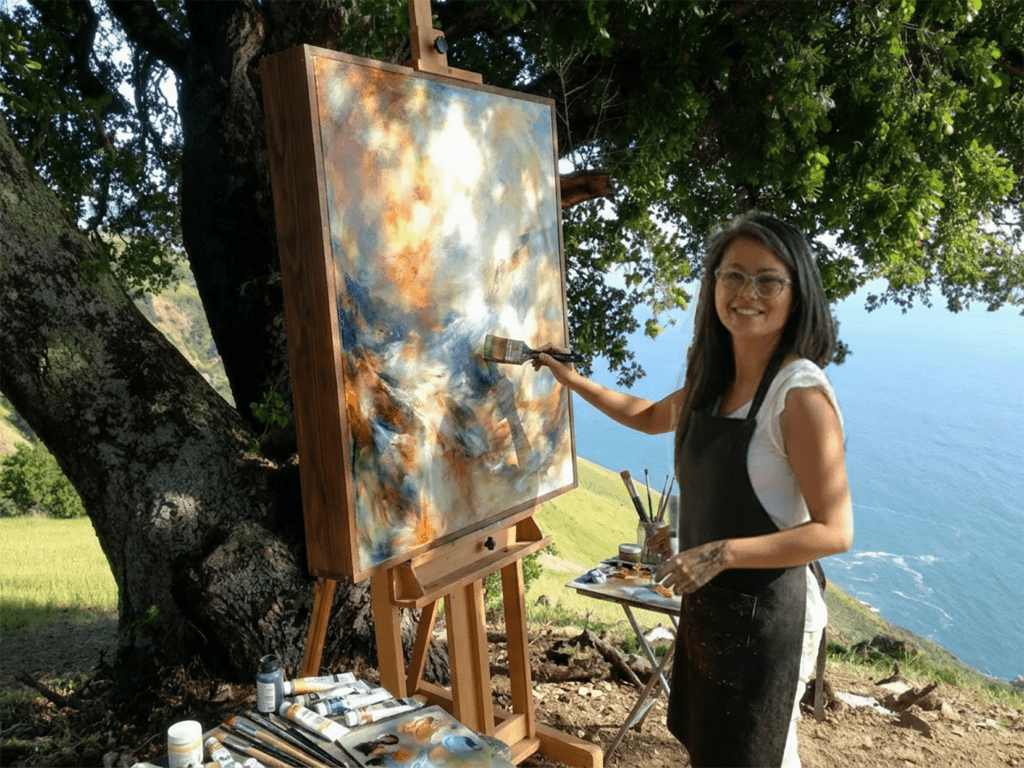
    There is an inventor of kinetic light, right in front of one of her prototype. There are Whispering Pods. It's a sort of an Inventor, Marlene Krueger. This is  not just moving shadows but burst of colors moving, kinetic light mixed with acrylic paint by Marlene Krueger.

    Reinventing Light Therapy

    Marlene Krueger’s life-long vision of creating a device that uses light to heal is her calling. When she was just six, she spent her days exploring the family ranch, surrounded by rows of sweet peas that sparkled in the sunlight. As the peas glowed, she felt a calming change, like the pods were whispering to her.

    One day, a beam of light seemed to reach out, as if to reassure her. She picked up a translucent pod, and it felt like a connection with nature embracing her, and the pain she had felt before, vanished. From that moment on, she was determined to recreate that magical experience with others.

    At the School of the Art Institute of Chicago, one of the top schools in the world, Marlene Krueger was determined to bring her vision to life. She wanted to invent a type of lumia light, just like the one she had imagined as a child, when her experience with pain went away.

    In 1986, Marlene Krueger developed a prototype of her vision. A course in Kinetics, Electronics and Neon inspired her to proceed. Her dream of giving people the chance to heal through light therapy is about to actualize.

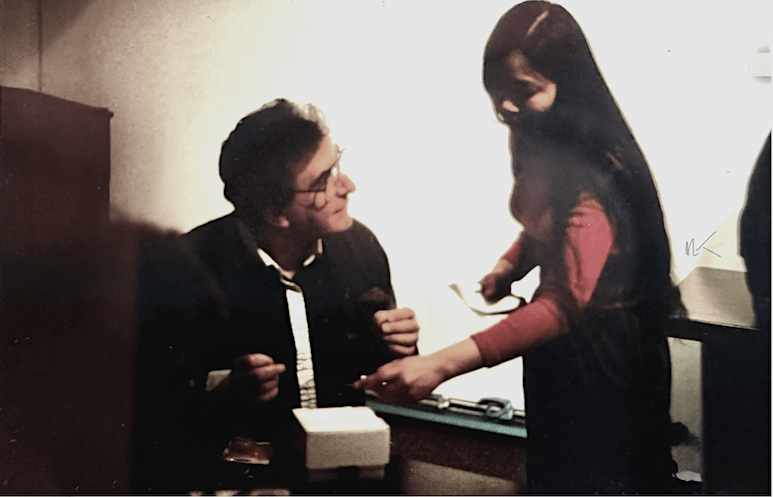
    To make her dream a reality, she called Dr. Billy Kluver in New York. She saw a phone number in a magazine that listed his work with machines that move, and kinetic light. He was known for working with many pop artists in New York. 

    At first Marlene thought a receptionist would answer the phone, but instead, she spoke with Dr. Billy Kluver, himself, an engineer at Bell Laboratories who empathized with the pop artist requesting his expertise in engineering with their kinetic light devices. Marlene talked for almost an hour about everything under the sun, sharing her purpose in life. 

    Billy Kluver was so impressed with Marlene that he invited her to meet with him in New York City, along with his wife Julie Martin, a contributing writer with “Art in America.” She wrote many of Dr. Kluver’s experiments with a broad spectrum of kinetic light confiding with famous pop artists in the 1960s.

    Marlene mentioned she could make it during Christmas break, and that was the plan. Dr. Kluver also gave her the number for Earl Riebeck, the inventor of the infinity mirror that was shown in “Star Trek.” He suggested Marlene call him up, and he’d be happy to share some of his insights. So Marlene did, and they actually talked for hours. Later, he invited her to visit him in New York City so he could show her all his inventions. She went.

    Her trip to New York was unforgettable. The experience in New York sparked Marlene to devise a more advanced prototype.

    After Marlene finished a prototype she allowed herself to test it out with her professors at the Art Institute, as well as city-wide high school teachers and college students who were at risk.

    During her final year, she was determined to keep her dream alive. She graduated from the School of the Art Institute of Chicago. Immediately she was invited to present and talk about her work with colleges in auditoriums filled with 4-500 people. In addition, her work was recognized, and she received an invitation to exhibit her prototypes and large-scale installations at a gallery located at Merchandise Mart, in downtown Chicago.

  • The Coastal Light Show: Bringing Pfeiffer Beach to the Classroom

    The Coastal Light Show: Bringing Pfeiffer Beach to the Classroom

    When words or sight aren’t enough, we turn to the sensory heartbeat of the Big Sur coast. Pfeiffer Beach isn’t just a physical location—it is a sanctuary of shifting natural elements designed to soothe the restless and awaken the senses.

    For a few fleeting weeks in winter, the setting sun aligns perfectly with the jagged Keyhole Arch. As the horizon dims, a concentrated beam of iridescent, golden light streams directly through the rock. This momentary “light show” casts a shimmering glow on the water and wet sand.

    Surrounding this visual magic is a landscape rich in texture and color. Approaching the sea arch, the rhythmic crashing of the waves provides a deep, grounding vibration. Beneath our feet, cool, dark sands give way to vivid patches of deep violet and purple. This rare color is created when garnet deposits wash down from the coastal cliffs. The wind and the waves mingle with the scents of fresh rain, crisp winter air, and rich garnet earth.

    Because many of my students are unable to travel to this beautiful stretch of the Los Padres National Forest, I wanted to bring the calming energy of the beach directly to them. Inspired by the crimson, orange, teal, and purple of the Big Sur sunset, I designed an interactive, kinetic light installation. By manipulating a set of motors and continuously changing, iridescent light, my students can step safely into an enclosed environment. Here, they experience the step-by-step beauty of the landscape—the changing colors, the rhythmic motion, and the peace of the beach—entirely on their own terms.

    A Brief History

    As the Los Padres National Forest, the road and beach are named after the magnificent Western Sycamores that line their path, just near the beach. In the summer, from June to August, the area gets a special treat called “June Gloom,” with lots of fog and cool weather.

    The Pfeiffer family’s story started in the winter of 1869 when Michael and Barbara Laquet Pfeiffer went to the southern coast of Big Sur. They were so enchanted by Sycamore Canyon that they decided to settle there, close to the coast, and start a new life. Over the years, their eight children married and raised their families here, creating a legacy that would last for a long time. In 1910, the Pfeiffer family opened the Pfeiffer Ranch Resort at their original home. You can also visit the interesting Esslen site nearby, which tells us about the rich history and culture of the area.

    In 1884, John Swetnam and his wife, Zulema Florence Swetnam, built a lovely cabin right by the Big Sur River. John was so kind that he gave away the first 700 acres of land, which later became the beautiful Pfeiffer Big Sur State Park.

error: Content is protected !!
Verified by MonsterInsights